Music
Samson et Dalila
Royal Opera House, London
5/5
Flamboyant spectacle with exquisite singing
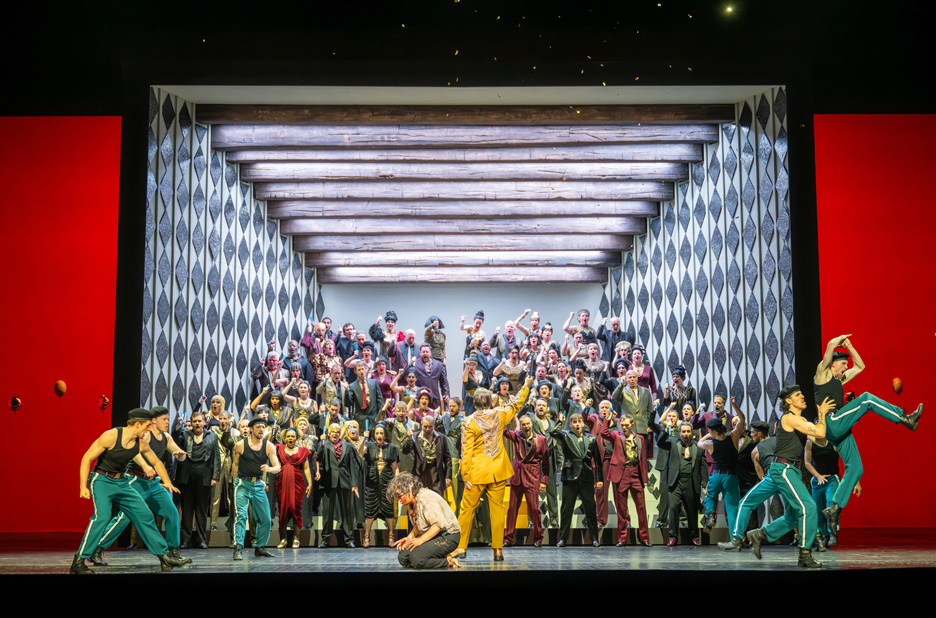
Richard Jones’ excellent production of Samson et Dalila first seen in 2022 returns to the Royal Opera House to impress and delight again. A striking vision of Camille Saint-Saëns’ best known opera, it charismatically blends the biblical with the modern, giving the accomplished ensemble starring SeokJong Baek as Samson and Aigul Akhmetshina as Dalila an opportunity to display their operatic excellence.

The story of Samson and Delilah is a harsh and unforgiving tale from the Old Testament, punishing giving in to temptation even more severely than betrayal or worshiping wealth. For a contemporary viewer it offers two fascinating strong characters, a man known for his physical strength who fails because of his weakness of character (or simply his humanity), and a morally corrupt woman who uses her power to enslave and degrade. We must be grateful for this despicable woman, as it allows for a possibility of female strength in this archaic world of base passions and revenge, where the piety is the only possible form of compassion.
The dramatic potential of this biblical story is clear, however with so many layers of accumulated religious and artistic interpretation over the centuries, choosing your own mix and point of view becomes a fascinating adventure. Richard Jones gives each act its own distinctive character, the first painting the conflict between two societies, the second focusing on the meeting of the two main characters, and the third a generous synthesis and contradiction of what preceded, a true spectacle of power.
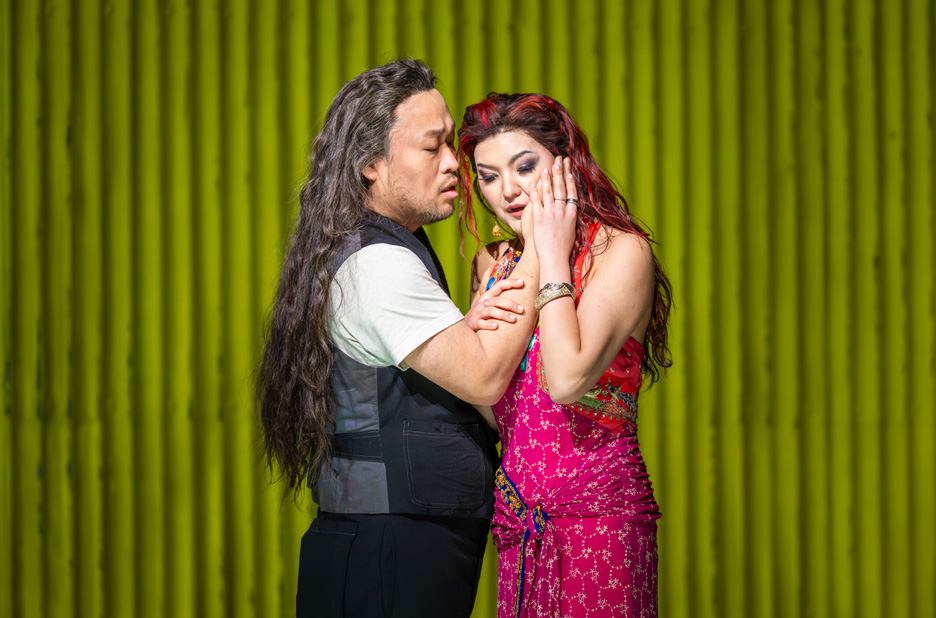
The two leads SeokJong Baek and Aigul Akhmetshina are just astonishing. Two completely different singers representing a confrontation of two different world views. In her role debut, Akhmetshina’s superbly controlled mezzo soprano embodies the clever seductress with natural restraint and warmth. In the lower register her voice is mahogany rich, with a clear breakthrough non-sharp strength in the top register which at times makes you hold your breath to hear it with as little white noise as possible. Baek on the other hand has his own mellow depth which makes him sound more like a baritone. His voice captivates in the dramatic moments with pleasing well-rounded power and in tender passages with moving refinement.
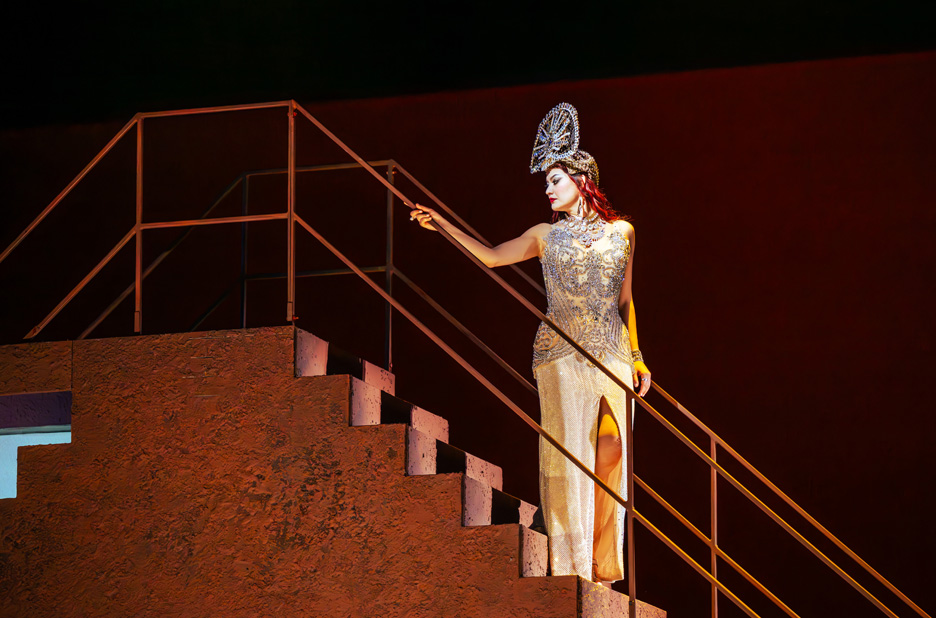
And of course it is Saint-Saëns’ beautiful score that makes it all possible. There is an abundance of orchestral momentum and melodic energy throughout, but particularly in the final act Bacchanale, which the Royal Opera House orchestra conducted by Alexander Soddy performs with style. It is worth noting how much noticeably better this orchestra plays at the moment compared to other London orchestras. The famous aria Mon cœur s’ouvre à ta voix gets a deserving interpretation, but for me the preceding duet Il faut pour assouvir ma haine and Dalila’s aria Amour viens aider ma faiblesse stand out even more, proving the suitability of Akhmetshina’s voice for the role.
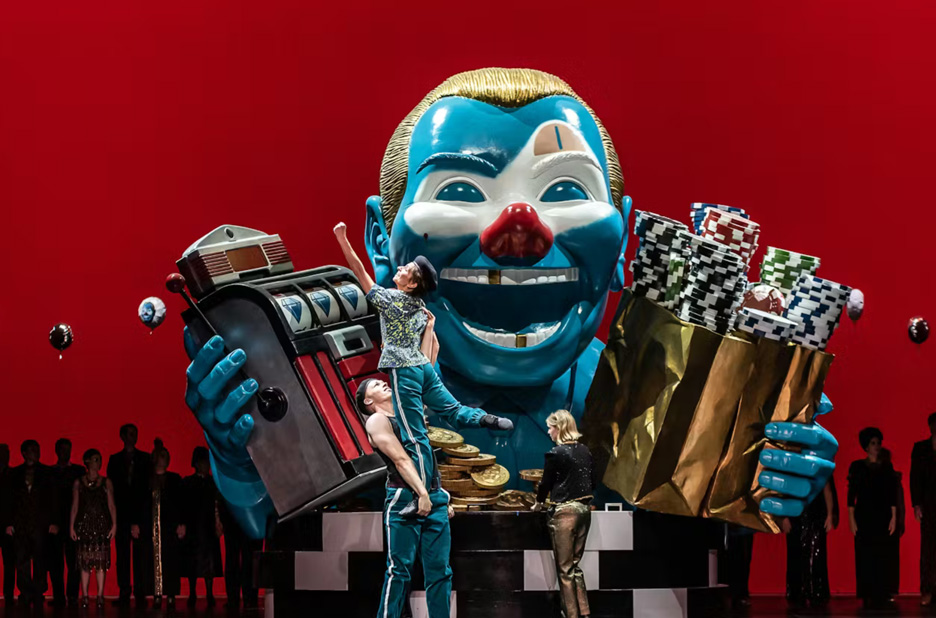
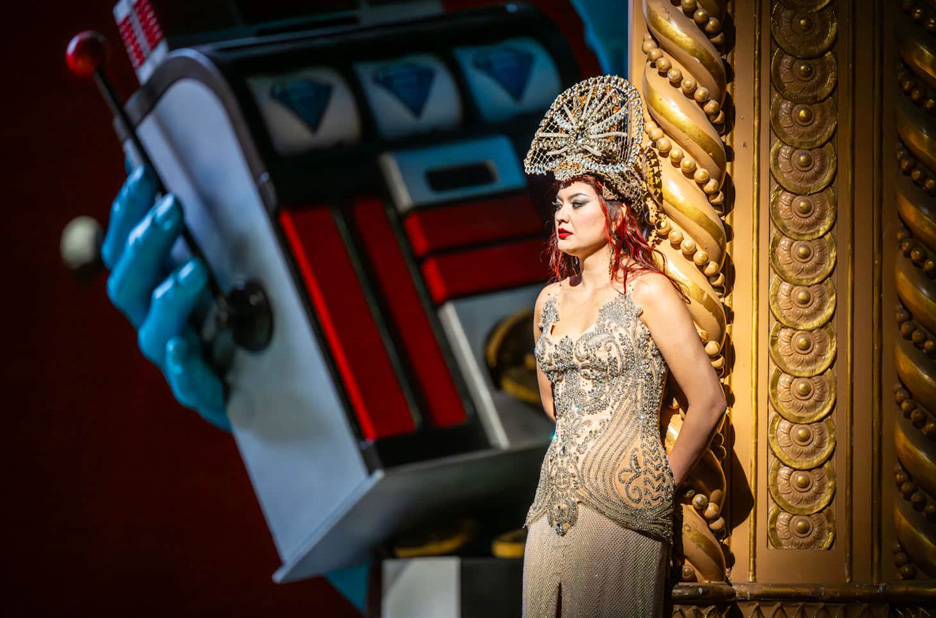
The action of the opera takes place in Gaza grating against contemporary events, although the staging opposes instead the humbly dressed Hebrews in muted hues with the vibrant colours, gold and panache of the Philistines, showing the conflict as one of a material versus a spiritual civilisation. In Hyemi Shin’s otherwise sparse modern set, the references to Trumpian acute greed and gambling cannot be missed in the embodiment of the Philistine god Dagon as a giant head of a gold-haired clown clutching slot machines and cassino chips. Some have criticised this eruption of our decadent present into a biblical opera, but I applaud it and believe it works very well enhancing the narrative and making it relevant.
The final act brings everything together in a whirlwind of extravagant, sardonic but still elegant celebration of excess, fortunately without too much gore. Philistine celebrations also include a perfectly choreographed balletic duet between two slightly camp soldiers. The opera ends as the temple slowly begins to collapse, successfully implanting this visual premonition as a fertile memory of the evening.