Art
Anish Kapoor
Hayward Gallery, London
3/5
Intriguing perspectives
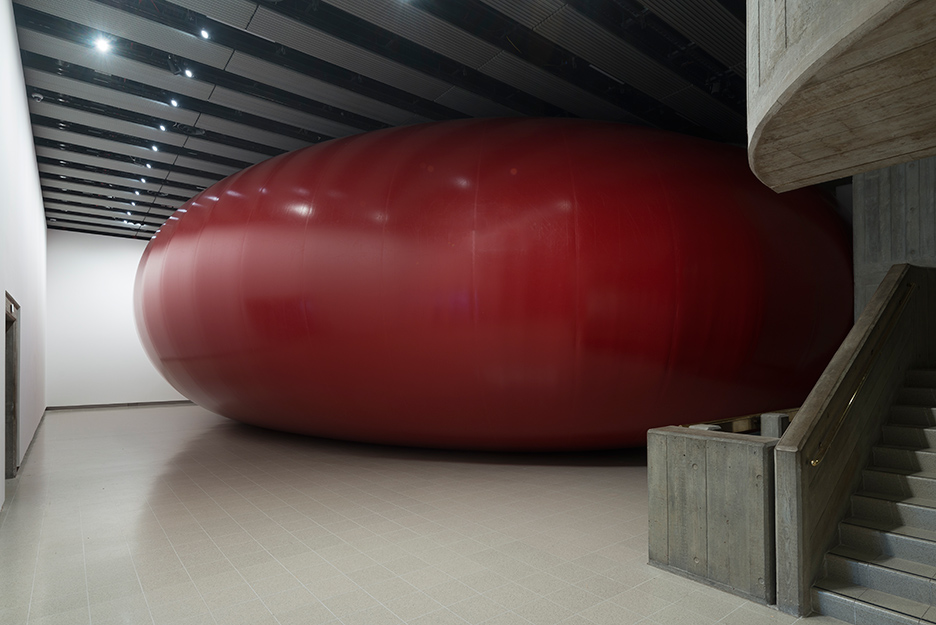
This small offering mainly of Anish Kapoor’s more recent work covers the full gamut from the sublime to the inconsequential. We start with All of Nothing (2026), an idiosyncratic huge, inflated elliptical balloon constricting and shaping the entrance hall. It uses a PVC membrane of the same rich matte red as Kapoor’s Marsyas which filled the Tate’s Turbine Hall in 2003. This piece is both bombastic and humble, easy to puncture but also a spatial obstacle to be negotiated, reviled or accepted. The director of the Hayward Gallery Ralph Rugoff describes it as a giant lung providing oxygen to the gallery. Its colour adds to the puzzlement of finding a strange gargantuan object randomly lodged in the space we occupy. It is hard to be irritated by its round benign innocence, but it seems a lesser work than the sinewy Marsyas which was viscerally questioning the boundaries between the organic and inorganic.
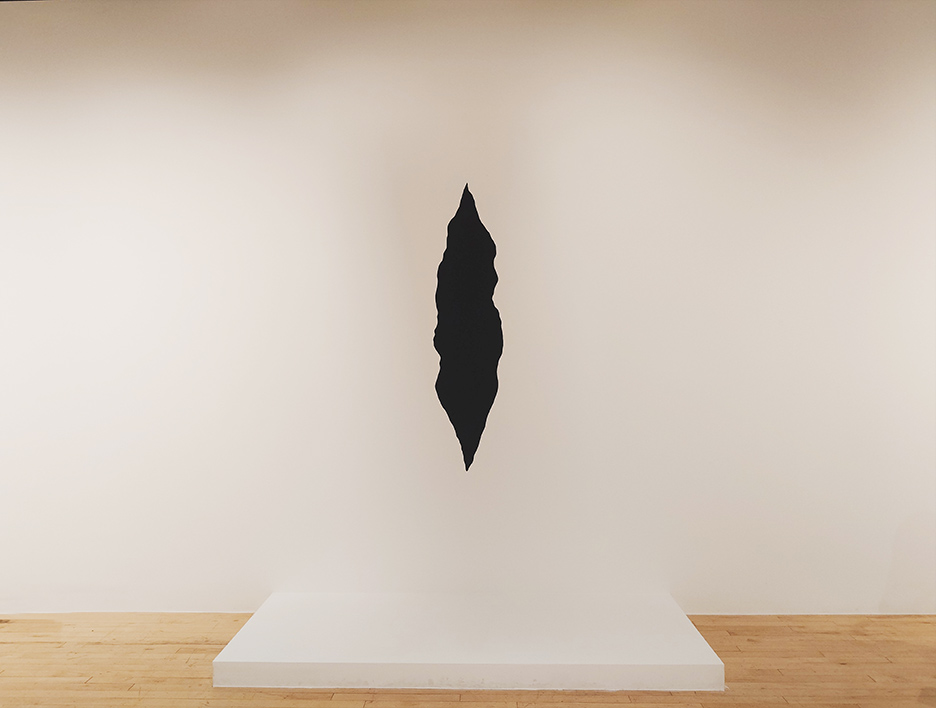
Vantablack works captivate with the strange properties of this colour which absorbs all light thereby tricking our senses into an unreliable perception of depth and perspective. Anish Kapoor has exclusive rights to use this patented black colour in artistic applications and he makes excellent use of it. The deep unstable overlap of three- and two-dimensionality of Untitled from 2026 – a feather, or a narrow entrance to a cave or a hanging portal which might after all be fully flat – is enjoyable to observe as one walks around the work. There is a novelty to the optical sensation, but Kapoor also explores it playfully and elegantly.
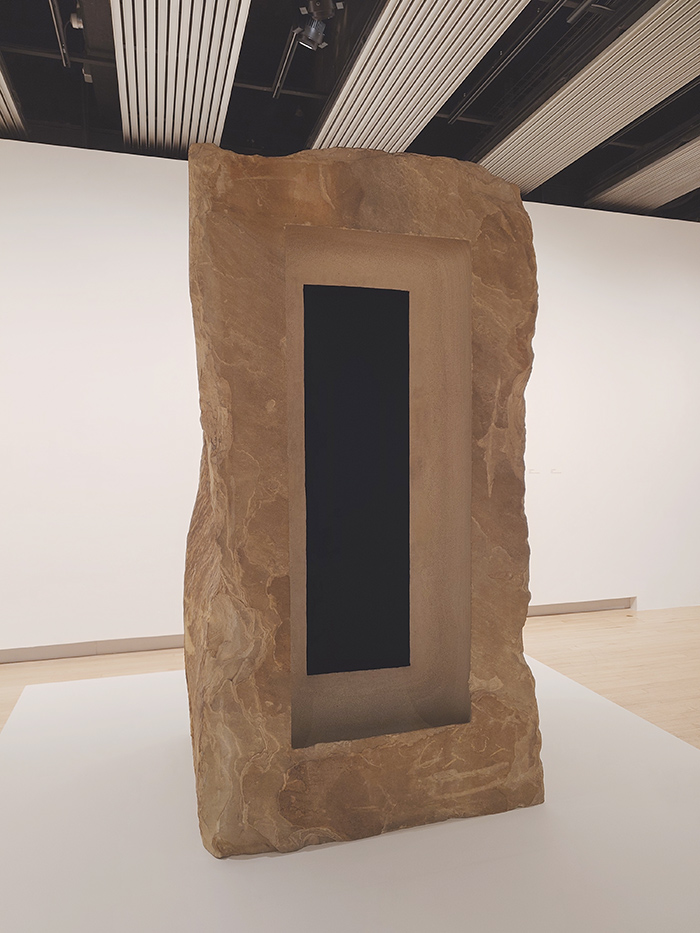
A sandstone sculpture akin to a gravestone whose rectangular interior is painted in Vantablack (Untitled from 1992) makes me think of Ancient Egyptian graves, robbed and left empty in the intense sunshine. If you have ever wondered what is on the other side of magnificent grave monuments, you have your answer – nothing, or if you prefer a black hole devouring all differentiation.
Descent into Limbo from 1992, one of Kapoor’s favourite works, is a Vantablack circle on the floor, suitably cordoned off, at first impressions looking like one of those abandoned drain repair jobs we see on our streets. It is another black hole in fact, a void enticing and ominous at the same time, a site of anonymous rupture that words can’t fully describe. It is impossible to decide whether it is hiding nothingness or plenty.
While Kapoor’s fascination with the effects of light and reflection and their distortions makes mesmerising sense, the other side of his artistic personality, the one obsessed with blood and gore, can often stay on the surface, only provoking mild interest or disgust without complementing it with any meaning. Some of Kapoor’s gigantic red sculptures fall into this category and so do Kapoor’s paintings, noticeably inferior to his sculptures.
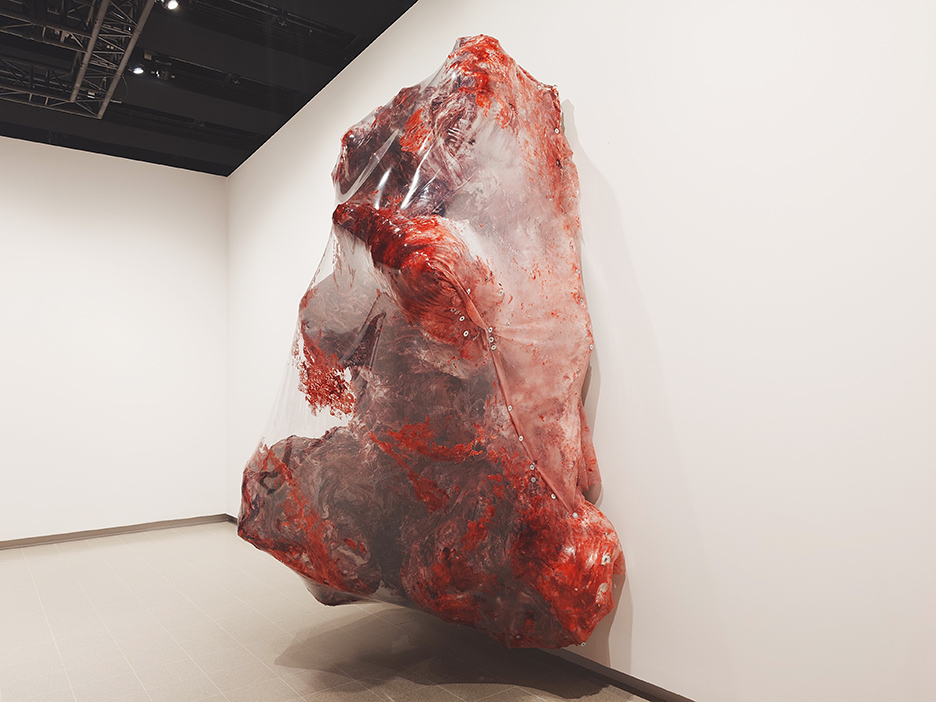
Some blood red sculptures succeed such as the large pseudo carcasses wrapped in plastic, Plastic Sacrifice I, II, III from 2026, like meat packs on the shelves of a supermarket for giants. When you approach them, the texture does not look like flesh at all, and this fake meat still protectively wrapped speaks of our time, where we hide our gradual destruction of our planet by creating an artificial need for megalomaniacal highly sanitised products derived from that very destruction.
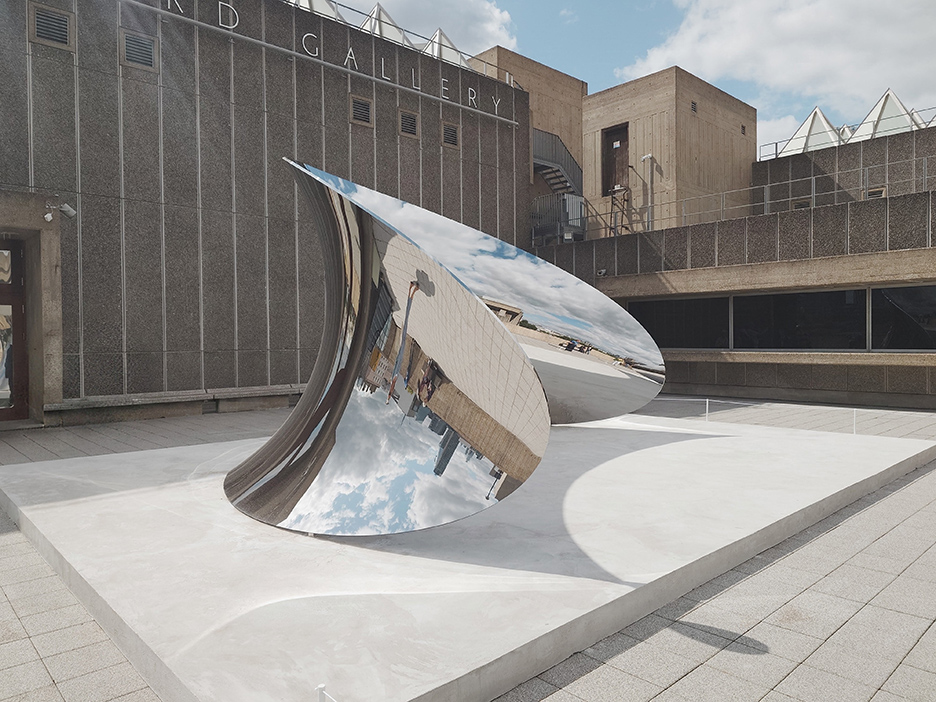
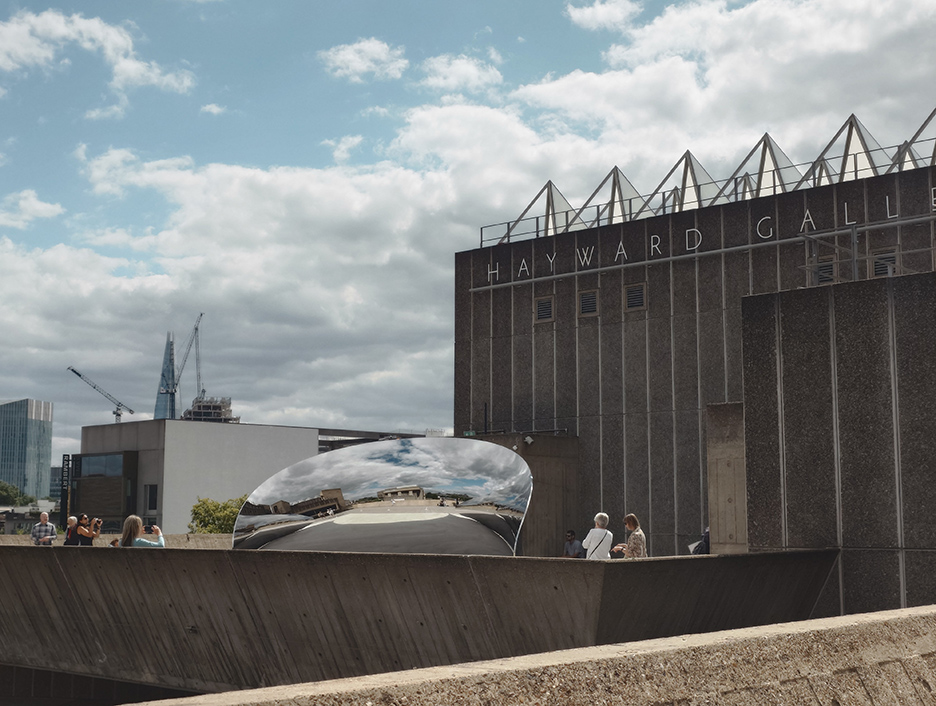
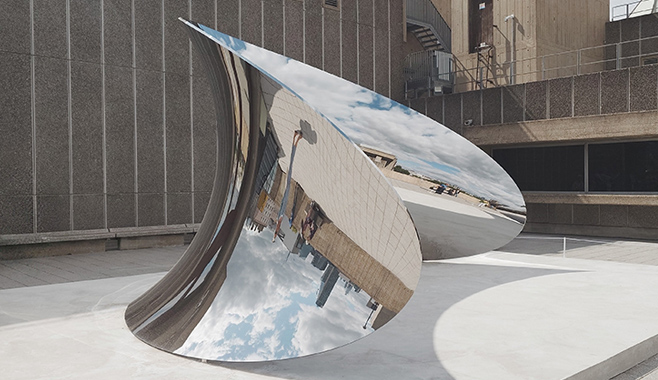
Where Kapoor undoubtedly excels is the public outdoor art, often his highly photogenic distorted mirror sculptures such as the Cloud Gate in Chicago. In these rare examples of successful populist art, the viewer can appreciate the sculpture and its effect on its setting without having to think about intent. We get to see several of these at the Hayward. Tsunami from 2025 stands out, improving the surrounding brutalist landscape by reflecting more of the ground and the sky, and creating pleasing rounded shadows and reflections on the white base. It sometimes appears that we humans can only appreciate our own reflection. I hope that’s not all we see in this seemingly charming wave.