Theatre
The Cherry Orchard
RSC, Stratford-upon-Avon
2/5
Uninspiring take on a classic
It is a shame that great intentions and skill have resulted in so little in this production. The first half still succeeds in just about holding together the loose structure of this great play, but by the second half there is no way to hide that Ranevskaya and Lopakhin, played by Helen Hunt and Kenneth Brannagh are not preserving the tension and are too emotionally aloof for the audience to engage or care.
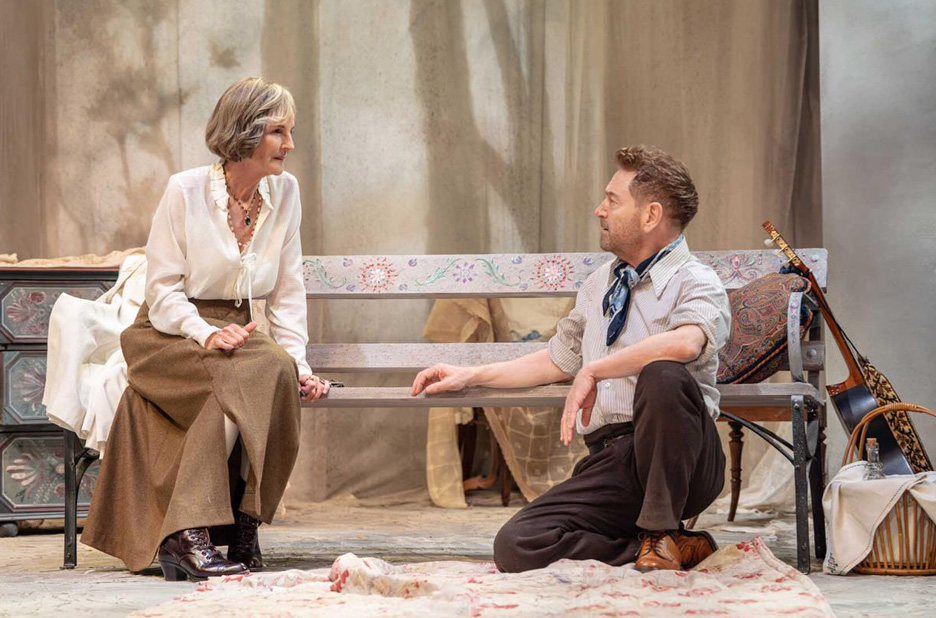
Brannagh adopts his native Irish accent for the role and this seems promising at first, creating a character more humbly conscious of his origins and simple in his presence and benign folksy personality, however as the play progresses he appears increasingly disengaged. There is just no chemistry between him and Hunt. It is the first time I see Branagh not excel, but the fault lies with the direction and casting. The ensemble, despite comprising some good actors, doesn’t rise above the sum of its parts.
I’m not sure why Helen Hunt was chosen for the role. She is a good actress, and delivers her lines with studied diction and meaning, despite the monotony of her range which cannot escape notice. Some have commented that she is too old for the role, which is just thinly veiled misogyny, and this is of course not where the problem lies. Ranevskaya, however she may be interpreted, and there are many ways, must be the focus of the play, whether visible or not. Everyone in The Cherry Orchard cares about what Ranevskaya thinks of them, everyone sees themselves through her eyes. We witness the final remainder of her fading aristocratic mystique which she knows how to wield. Whether we as viewers are convinced of Ranevskaya’s power is irrelevant, but it must exist in some shape and form as the whole play depends on it. The American Hunt doesn’t have the charisma and comes across like a dull suburban lady who lunches. Neither does she use the opportunity to modulate and develop her character as events slowly escalate.
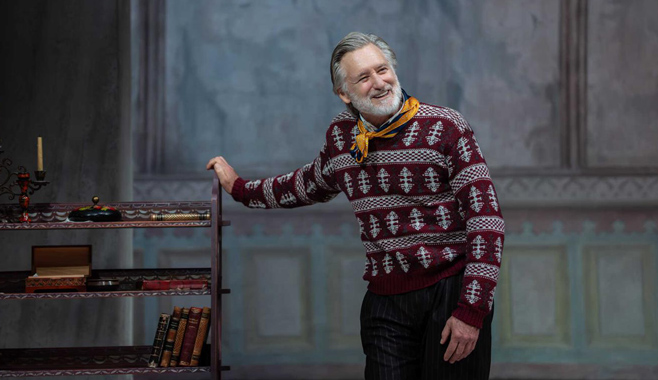
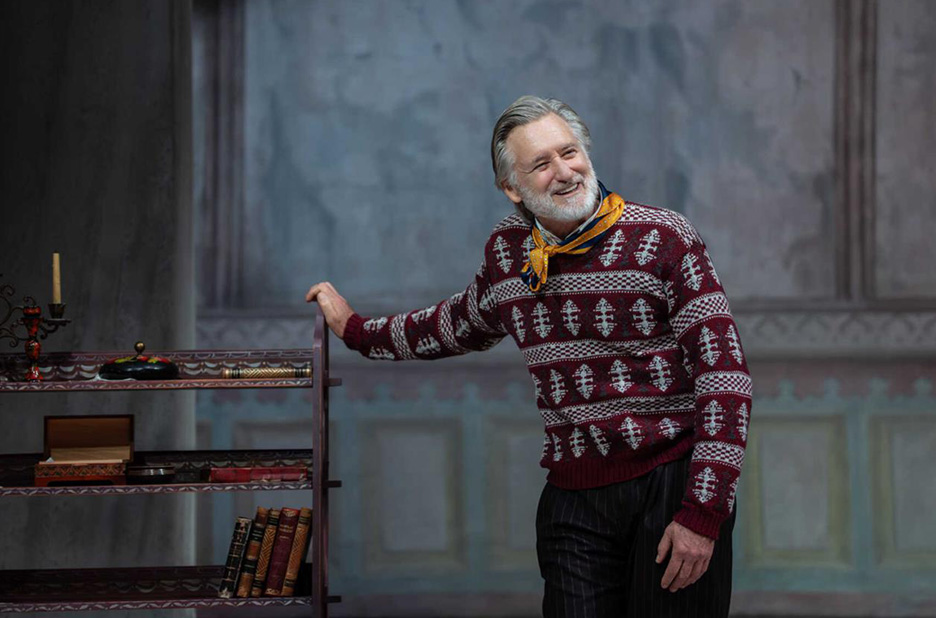
The actor who shines is the other American, Bill Pullman, playing Ranevskaya’s brother Gaev. Pullman finds the perfect timbre for this rambling character and makes him kind in a misguided way, toning down his aristocratic arrogance. His quirky presence, amplified by his colourful poorly fitting jumpers, creates one of the very few places of empathy for the audience. His speech to the old bookcase is gently poignant in a manner faithful to Chekov’s writing.
The beginning and end are underwhelming. The housemaid Dunyasha opening the play is unconvincing which does not bode well. The old manservant Firs does not elicit much sympathy either for his tragic fate at the very end. Often the productions of The Cherry Orchard find it difficult to balance the meaning given to aristocracy and the servants, but somehow this staging is unable to deliver either.
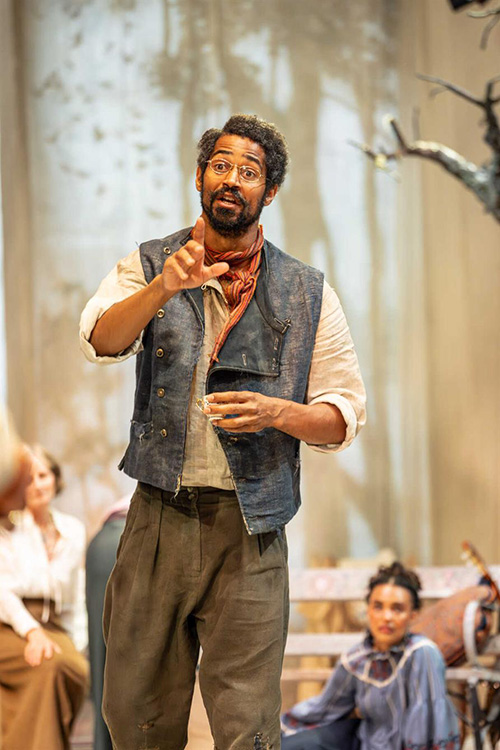
Among other actors who stand out are Alfred Enoch playing Trofimov, the eternal student, who closes the first part beautifully, offering the audience some hope for the second half. Guy Henry as Pishchik, the neighbouring landowner, has a great comedic solo at the beginning of the second half before things get irremediably disjointed. I was not convinced by the contribution of the live band, somewhat glossing over the lack of character and generally appearing redundant. Except for Gaev’s jumpers, the costume and stage design were largely vague and inconsequential.
Laura Wade’s adaptation has good moments, and perhaps with a different cast and direction its peripheral references would have sparked. Brannagh uses his line from Hamlet to Ophelia to say to Varya ‘Off to the nunnery go’ which falls flat as no sufficient layers have been built into the production for this to work as an additional flourish momentarily connecting the actor and his celebrated youthful role with the Shakespearean theatre we find ourselves in.
For a great recent staging of The Cherry Orchard, I would refer you to the Donmar production from 2024 directed by Benedict Andrews. I look forward to the next production that succeeds in matching its quality. And I’m sure this is not the last time we see Brannagh on stage. There will be other opportunities to witness this great actor enchant again.