Film
Isabel (2026)
Gabe Klinger
3/5
On female ambition and wine
Isabel is a sommelier in São Paulo’s fine-dining restaurant, but she dreams of opening her own wine bar. She wants to share her love of Brazilian independent artisanal wines against the tide of ubiquitous industrially produced bottles. It is an honourable ambition, but can she make a success of it?

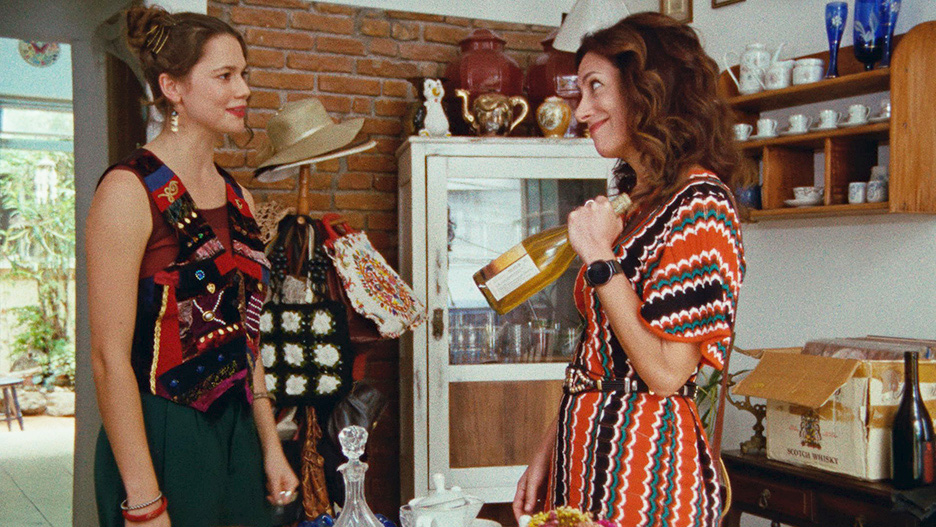
Co-written by the director Gabe Klinger and the lead actress who plays Isabel, Marina Person, this film offers a balanced portrayal of female ambition and the possibilities for its realisation. The story initially focuses on Isabel’s enthusiasm and equally high consumption of wine. We see the amusing repeating pattern of her household receiving boxed deliveries and the bottles later waiting empty for the bin men collection. But there is at times a downbeat note in her reaching for the bottle as she gets increasingly unhappy at work. In her circle of female wine experts she is thought of as a ground-breaking role model as she was one of the first women to promote natural wines, but she feels that others have now overtaken her and that she has not achieved what she wanted.
The happy and energetic opening scene with Isabel and her husband Fred pressing grapes with their feet, as is traditionally the custom, introduces Isabel’s passion, her positive temperament and the subject matter of the film. Klinger avoids the easy plot-generating mechanism of showing us a fraught marriage. Instead, Isabel and Fred’s relationship is happy, equal and tender. However, we see Isabel get progressively more frustrated with her job. When she meets a potential investor, she puts in a good effort to present her case. Although the investor eventually pulls out, she decides nevertheless to take the plundge and open a bar in her neighboroughood.

She calls her bar ‘Os Rejeitados’ (‘The Rejects’) after the many bottles she recomended which her previous boss rejected. But this also summs up how she feels about herself. Her middle-class crisis may be low-key and she may put a happy face on it, but that doesn’t make it any less real. She doesn’t tell anyone that she actually has no investment money. It is strange that in this tale of attempted entrepreneurship there is no mention of the stresses of financing, perhaps one of the most difficult obstacles to new businesses. Presumably Isabel finances her project out of her own pocket, and one has to note that she is very lucky to be able to do that.
The artisan aesthetic extends to the grainy 16mm film and Isabel’s home, an older house for São Paulo where most people live in bland modern high-rise flats. The house happens to belong to the director whose outlook is unambiguously urban and multicultural. We get to see glimpses of his São Paulo as warm, old-school and full of unexplored possibilities. Isabel says that her favourite artisanal wines are irresistible despite and because of their imperfections. I wish I could say the same for the film which although very enjoyable and carrying a certain Brazilian joie de vivre, appears light and doesn’t make a memorable case for Isabel’s ambition.

After her business fails, Isabel decides to share the remaining stocks of wine for free with passers-by creating a big street party. Although this final scene celebrates the enjoyment of wine, it is somewhat anticlimactic and the viewer wonders what will be the consequences of these two important events tied with desire, disappointment and anxiety: the business failure and the subsequent spectacular largesse of her wine gift to the neighbourhood.
Speaking at the Q&A after the screening at the London Film Festival, the director Gabe Klinger stated that at the moment for him the meaning of the film lies in the importance of being able to have the choices associated with a democratic society. Choices such as being able to start one’s own business. Those are currently threatened in a high-stakes election in Brazil likely to be won by yet another destructive far-right candidate. Consequently Isabel’s final party of the rejected could appear like the last big bang for civil society. And if it indeed turns out to be so, it was at least a glorious democratic celebration with one of the most pleasurable and refined drinks in the world.