Theatre
The Cherry Orchard
Harold Pinter Theatre, London
5/5
The steel, warmth and anxiety of Kristin Scott Thomas
Ian Rickson’s staging of this always deserving play points out with precision and finesse the differences of social class between the characters, revels in the comedy of the writing, and with the continuous movement of actors suggests the low-level anxiety of those who need to be constantly active so as not to have to face the emptiness of their lives. Kristen Scott Thomas and Stephen Mangan demonstrate yet another different, eminently fitting way to play Ranevskaya and Lopakhin.
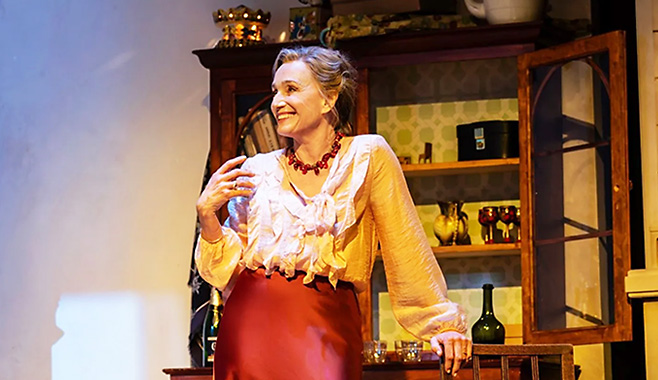
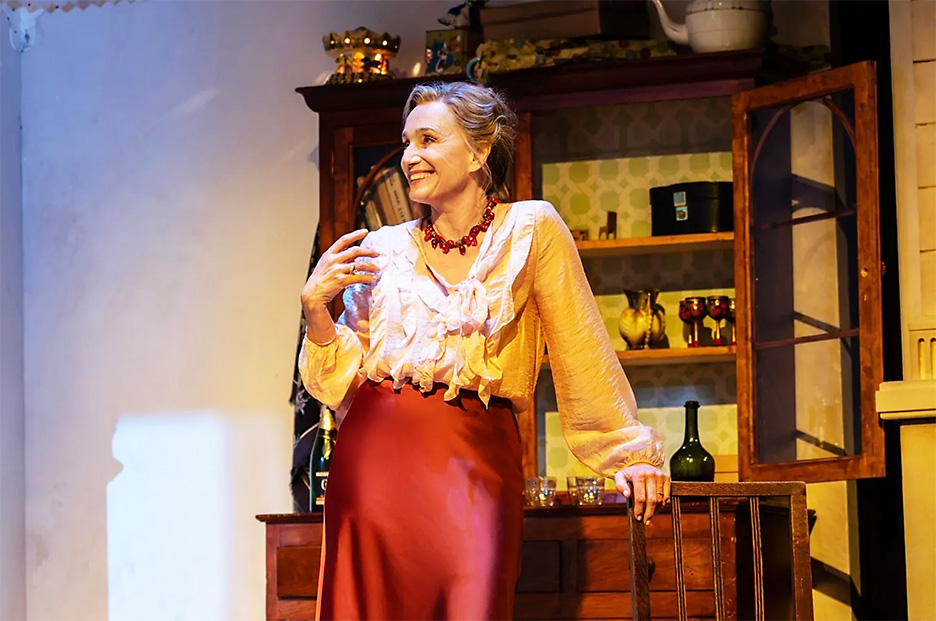
Scott Thomas can always be relied upon to avoid any sentimentality. She exploits here her characteristic sneer to great effect. Her Ranevskaya is completely psychologically believable. She is truly a member of the privileged classes who cannot even for a second imagine a world where her social class would not be rightfully and morally on top, even when penniless. She genuinely cares for her servants but only as long as they are subservient or needy of her attention and approval. As soon as a certain line is crossed, her steely dismissive stance eloquently communicates it all. In the scene when Lopakhin explains why he had to bid for the estate which Mangan delivers with a genuine desire to be understood, Scott Thomas’ wordless reaction is stunningly clear.
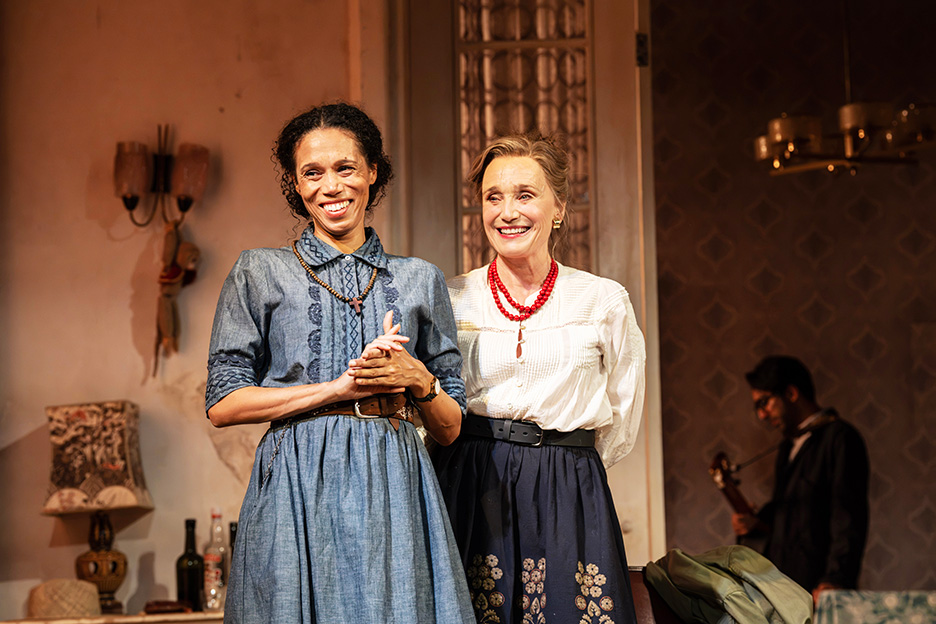
I got used to Ranevskaya that doesn’t raise her voice, but here Scott Thomas freely does so, in frustration rather than anger, and this contributes to fleshing out her character’s disappointment with how things have panned out for her, despite frequently haughtily glossing over the reality and pretending to be in control. When her good mood prevails, often helped by a glass of alcohol, she banters with other characters gently and dismissively, in a way that safeguards her superiority. Her commanding likeable radiance expertly hides her disappointment. In the second half when everyone is partying while awaiting the outcome of the auction, Scott Thomas amusingly sneaks in and out to top her glass of wine. She is not taking part in whatever the party is supposed to represent, a premature celebration or the final act of defying fate.
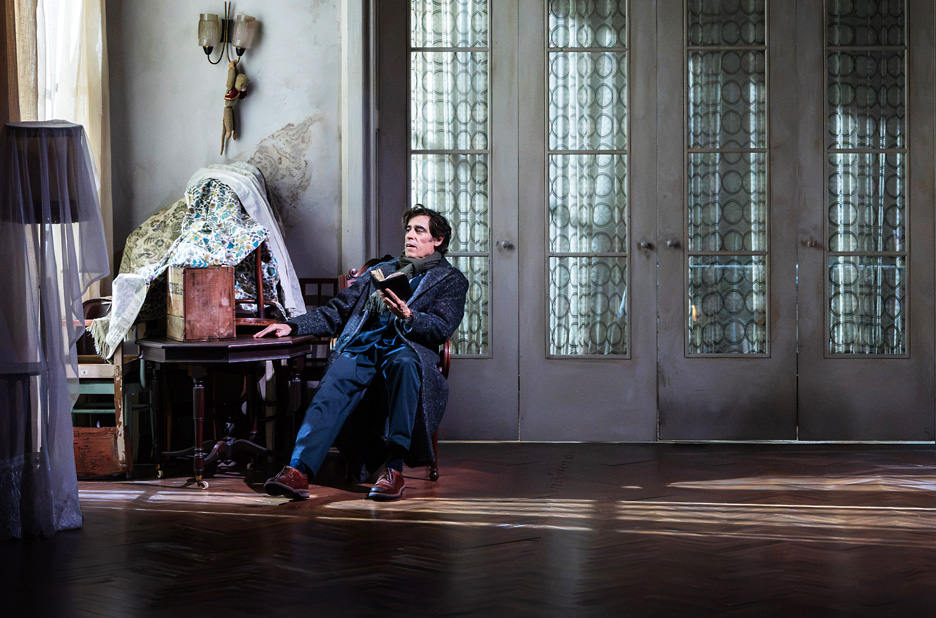
I have never seen Mangan in a serious theatrical role and I am impressed with the ease with which this actor of great comedic skill and timing embodies a son of serfs who has developed and enriched himself but is still in thrall to the matriarch of the estate. Mangan plays Lopakhin much more softly than the recent incarnations by Kenneth Brannagh and Adeel Akhtar. He shows that Lopakhin does not have to be confrontational, particularly when the actor playing Ranevskaya holds the stage with such natural authority. In fact, the pairing of Scott Thomas and Mangan for the two main roles works incredibly well in this production.
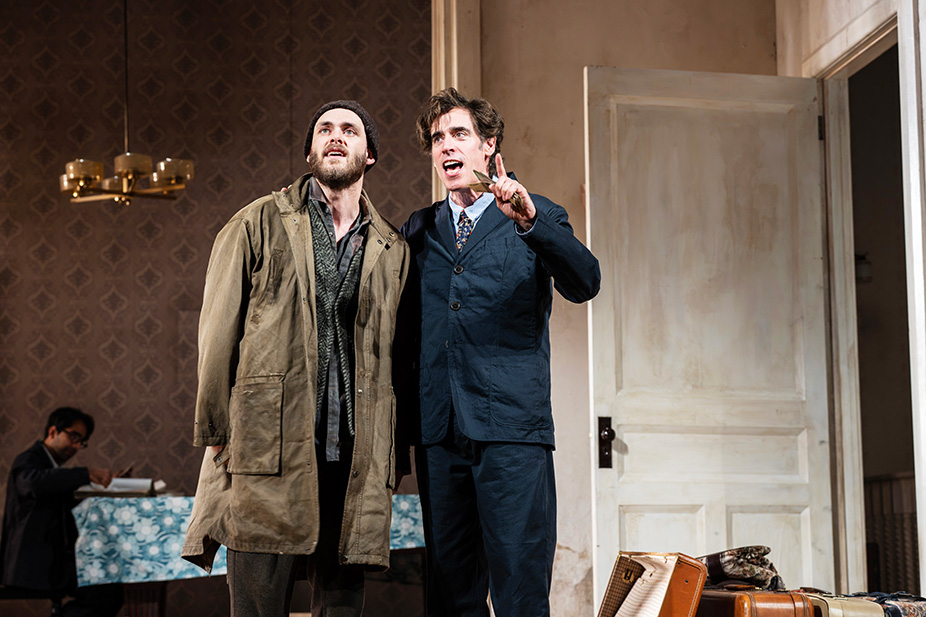
Sussie Juhlin-Wallén has designed the costumes not to draw too much attention to themselves, mixing rustic Russian motifs with low-key modern dress. It almost seems as if this was done on purpose to distinguish this production from the successful staging of Benedict Andrews from 2024 which featured more extrovert clothing. Ranevskaya gets to wear some more elegant silky garments to stand out from the rest of the household. The mouldy walls of Chloe Lamford’s set ensure that the audience can take in the deterioration before anyone steps out on stage and starts keeping up appearances.
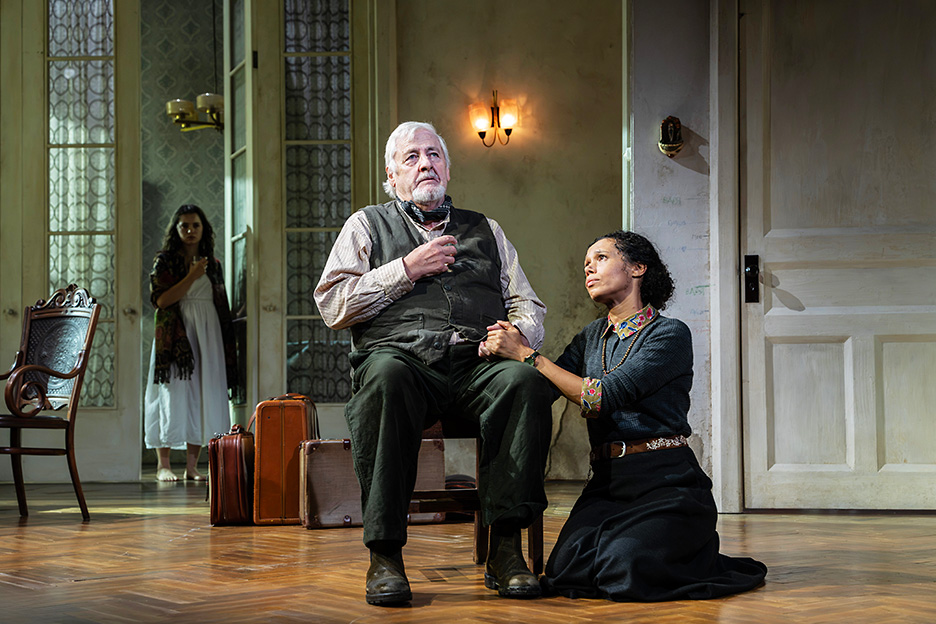
Scott Thomas depicts Ranevskaya’s grieving for her son beautifully, without any excess. On the other hand a short scene when Ranevskaya’s daughter Anya, otherwise well-embodied by Anastasia Martin, sees the ghost of her brother in the orchard jars a little. The rest of the cast perform well, perhaps with the exception of Shubham Saraf’s Yepikhodov who is too gimmicky and does not win our sympathy. More attitude and strength from Varya would have been welcome, but Vinette Robinson sticks with a traditional submissive version of the character. Peter Wight’s Gaev is simply a charmless fool, but always quick to point out the pecking order where he places himself at the top. Megan Cusack plays Dunyasha with an Irish accent as a simple but likable happy-go-lucky flirty servant.
Conor McPherson’s adaptation is fairly respectful of the original, modernising language rather than intentions. I was hoping for a meatier role for Trofimov as in other recent adaptations, but instead we get a refinement of the portrait of the German governess Sharlotta Ivanovna played with assurance and deadpan humour by Ruby Bentall. Instead of a boring old fool, Sharlotta becomes one of those timeless mysterious secondary characters who you can imagine popping up in another play, also as an interesting outsider.
Fir’s tragedy doesn’t feel as distressing as it could and perhaps should be, almost an afterthought to the quick exit of the rest of the cast. I guess I just can’t forget June Watson’s amazing performance as Firs from 2024.
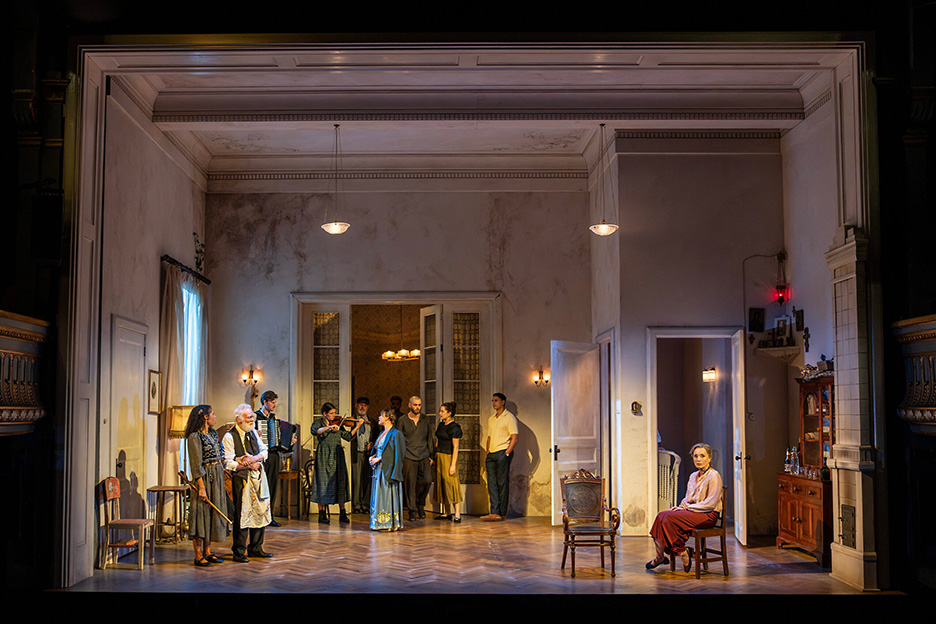
Overall, this production comes close to Benedict Andrew’s from 2024 in terms of quality, although it takes a completely different approach. It follows up the opportunities for comedy and momentum with smooth stage choreography, perhaps a little too smooth at times. More closely following the purpose and moods of Chekhov’s text, and with two great leads, it brings to life a moment of personal and collective crisis navigated in the only way possible – with existing means.