Theatre
Indian Ink
Hampstead Theatre, London
3/5
Stereotypical play saved by engaging conclusion
As much as I enjoy my encounters with Tom Stoppard plays, even the lesser ones, Indian Ink, first Stoppard revival since his death, disappoints with its conventional colonial beliefs and tedious nostalgia, but nevertheless manages in the second half to bridge the gap with the present and offer theatrically engaging conclusions.
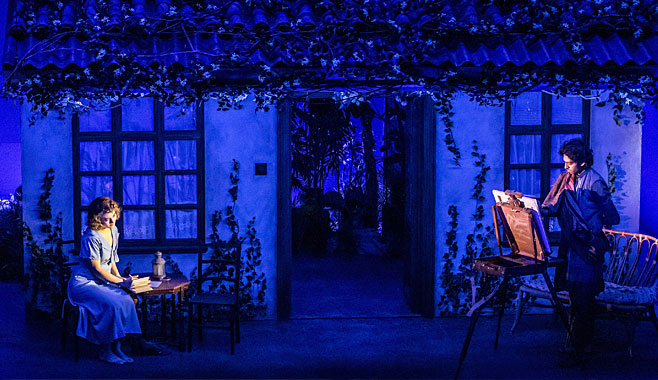
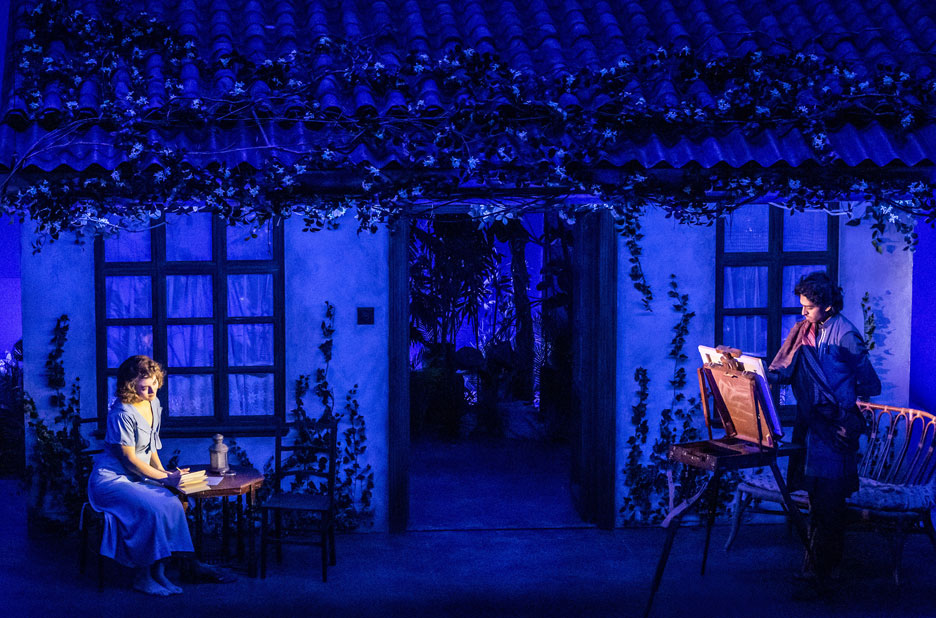
Young English society girl and poet Flora Crewe travels to India in 1930, allegedly for her health. There she meets a young Indian painter Nirad Das who is dazzled by her and offers to paint her portrait. There is a lot of ‘I’m so sorry I have offended you’ – ‘No it’s me who’s sorry’ in an endless empty game of period repartee which does not really signify the meeting of two cultures or two individuals. There is also a lot of ‘Don’t be so Indian’ – ‘But I am Indian’, benign but cheap shots at cultural stereotypes. The dull sentimentality of their encounter fails to explain or enhance either character. We don’t really get to know Nirad Das, played by Gavi Singh Chera, except for his polite demeanour, excited youthful appreciation of all things English, English literature in particular, and rudimentary hints at political frustrations.
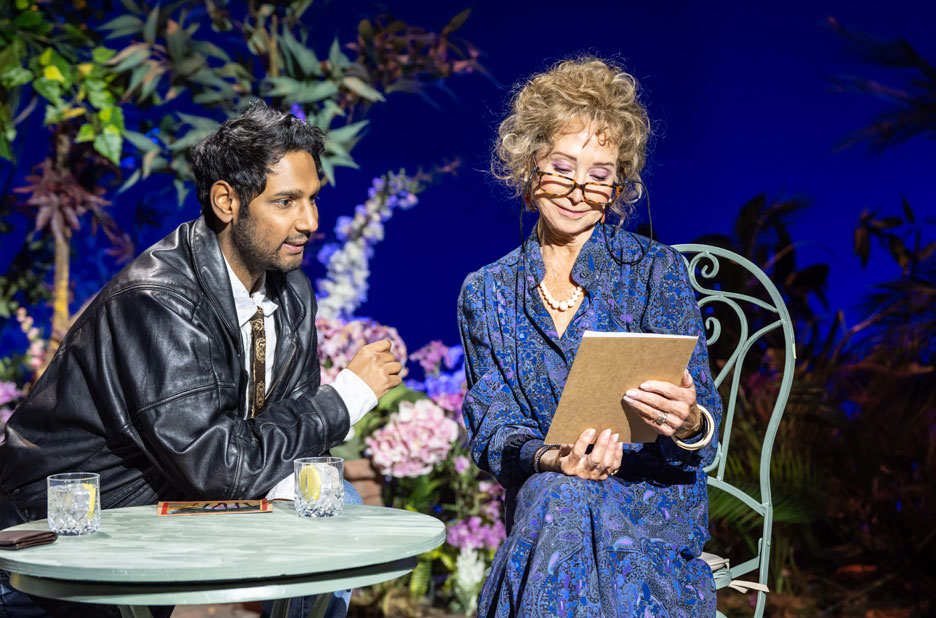
Similarly to Arcadia the action takes place in parallel in the present and the past, juxtaposing Flora’s Indian experiences with the present-time narrative focusing on her sister Eleanor, now an old well-to-do woman forcing her cakes on her visitors and taking herself much too seriously. Eleanor is visited in turn by Eldon Pike, a caricature of an American academic, who is researching and writing about Flora Crewe, and in the second half by Nirad Das’ son Anish, also a painter. All these opportunities for tea and cake in an English garden! Sometimes I think Stoppard has a real talent for farce.
There is no doubt that Felicity Kendal is the star of this production. As a regular Stoppard collaborator who has previously played the role of Flora, Kendal’s performance as Eleanor is at the heart of the play. She enacts the witty off-putting conservative colonial with polish, beautiful diction included. In the last scene, when she reminisces about visiting her sister’s grave in India, she gives us the most moving moment of the evening, connecting the grieving for the playwright with his play.
Ruby Ashbourne Serkis plays Flora as a giggling, innocuously charming coquette who it would be hard to take seriously as a poet. Her sister Eleanor makes the journey from communist sympathiser in her young days to staunch conservative mirroring, it seems, the allegiances of her men. Thus the main female characters cannot be said to be particularly inspiring or consequential, in fact they are largely a variant on traditional female roles. Admittedly Flora is free spirited enough to openly enjoy sex with men, to write poetry and to come to see India on her own before she dies. This may qualify as emancipation appropriate for her time, but it is not very exciting to watch. She encourages Nirad to be more Indian or less Indian, in a superficial banter of attraction. The only thing this communicates about the cultural differences is that they are safely stereotypical.
Things improve in the second half when we concentrate more on the present day, with interesting structural overlaps with the past and more lifelike and witty complexities. Eldon Pike, played by Donald Sage Mackay, is plausible with his tabloid-journalist shallowness and obsessions, a continuation of the shameless Nightingale from Arcadia. Nirad Das’ son Anish, played by Aaron Gill, is very circumspect of Eleonor’s patronising colonial superiority, but occasionally gently undermines her. Eleonor even utters the words ‘Are you going home?’ assuming Anish’s home is India – a statement symptomatic of those safely monocultural in their minds, who have no understanding of non-binary cultural identities or indeed of the consequences of colonialism.
One thing Anish and Eleanor strongly agree on is that Nirad’s private painting of Flora should remain private, as originally intended. This understanding of the private connects them more soundly than their knowledge of India. And although you could say that this is an example of an alliance that the right-wing politicians would claim is amply sufficient to show respect to both sides, I would have to beg to differ. But the agreement between Anish and Eleanor at this point is no doubt meaningful, important and satisfying. The surprising redemption of this play is in this structural synthesis at the end, suggesting that the reappraisal of the past is only truly valuable as an unexpected personal gift.