Film
No other choice (2025)
Park Chan-wook
5/5
Superbly orchestrated carnage
A paper manufacture executive Man-su loses his job at the pinnacle of his career. Initially incredulous and naïve, he thinks that reprimanding the new American owners of his company would make a difference. However, after undergoing the obligatory and horrific HR brainwashing, when the bills start piling up and the family has to consider giving up their cherished home, he eventually decides that his only chance of landing a job again is to eliminate the competition.
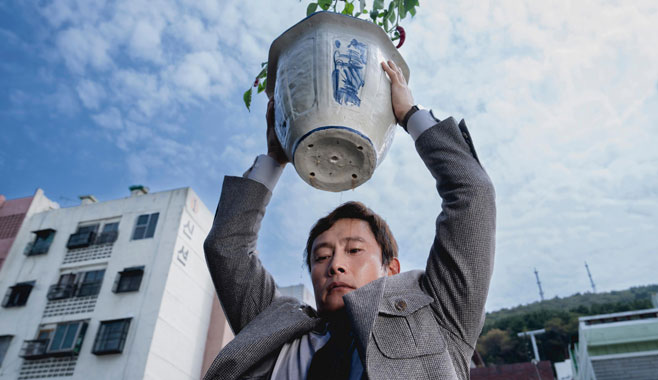
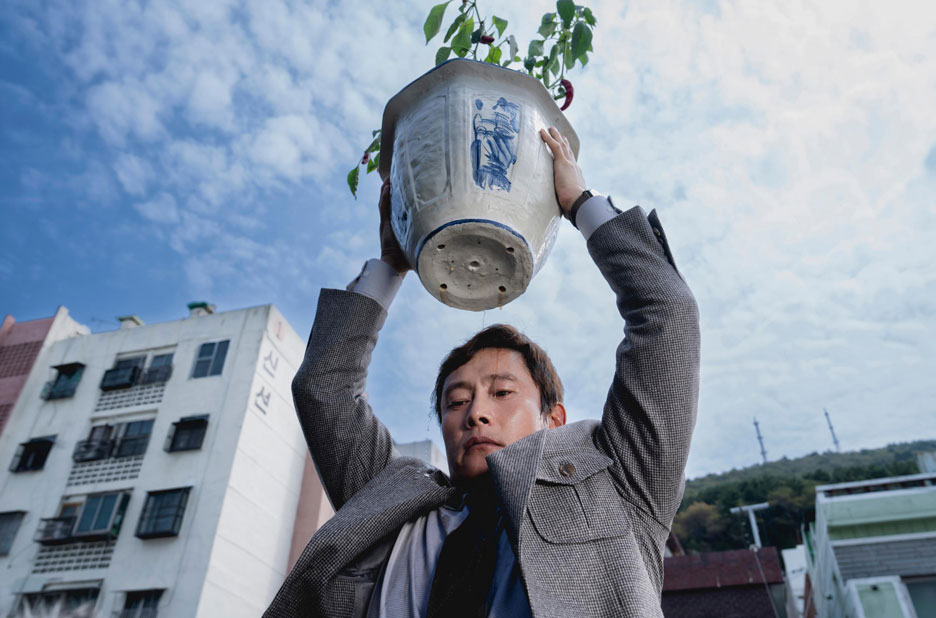
His first murder attempt is a hysterical series of unhinged slapstick scenes with the wife of the victim accidentally pulling the trigger instead of the inept Man-su. But as Man-su states in his many uncomfortable interviews, he keeps learning. With the much cleaner second murder Man-su for the first time successfully negotiates the psychotic split between his genuine sympathy for the victim, who is in the same situation as himself, and the violent act he has forced himself to commit. In the third murder Man-su enacts a highly elaborate premeditated act of gory violence, this time more effectively covering his tracks.
Losing one’s job is no laughing matter. But Park Chan-wook turns all the violence outward, letting us admire its extent, and channels it into multi-layered black humour fully in the service of the narrative. If after unleashing the accelerating violence of the murders, which by the third repetition become very unpleasant to watch, the director did not deescalate it, this would be a very different film, shallow and gratuitous in the manner of Tarantino or Paul Thomas Anderson. But the point the director makes is not that Man-su is a serial killer, but that in today’s job market, circumstances could lead anyone to resort to violence. Anyone who has ever lost a job will feel at least some small degree of satisfaction seeing the trauma exteriorised and displaced into brutal wish fulfilment.
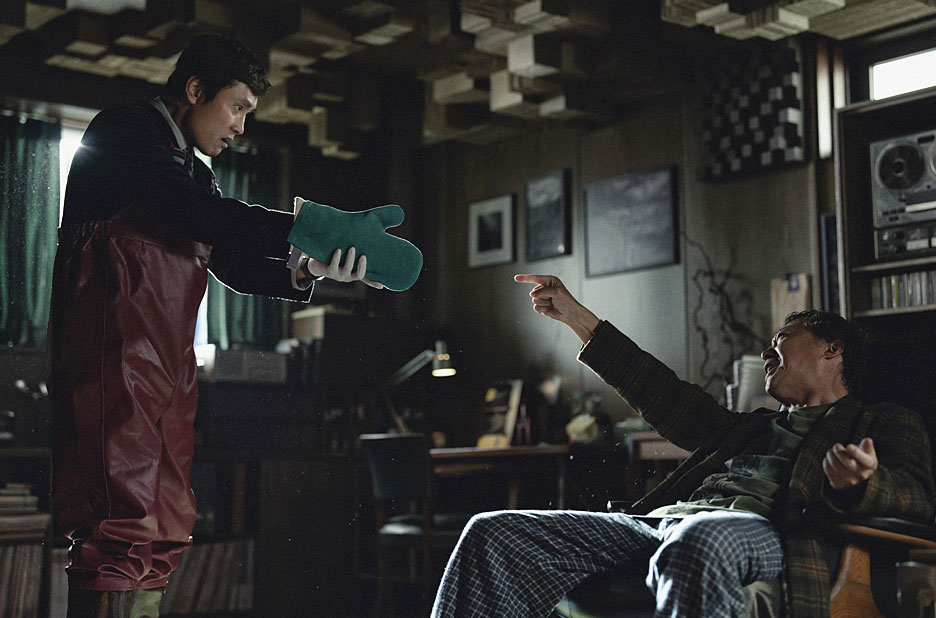
The well-known Korean actor Lee Byung-hun impresses as Man-su, showcasing his range for different levels of comedy and character development. We have some sympathy for his murderous character because his affection for his family is realistic and believable. His first murder attempt with a flowerpot is a beautifully modulated comical scene. His trapsing around in unflattering waders to avoid snake bite cannot fail to raise a smile. Furthermore his dancing dressed as John Smith to his wife’s Pocahontas, looking more like a deranged mix of Napoleon and Christopher Walken, is a comedic gem.
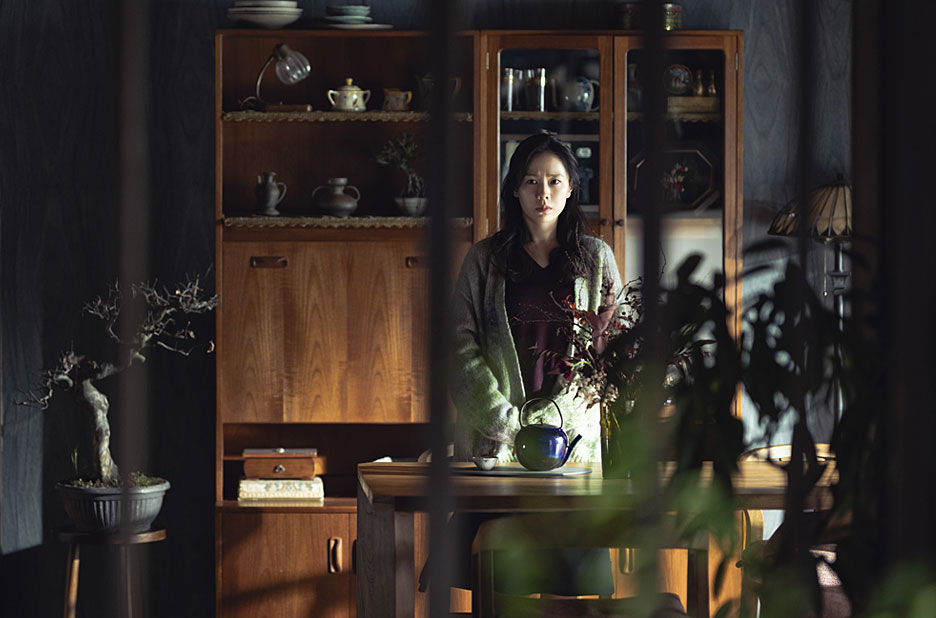
Son Eon-jin assuredly plays Man-su’s wife Yoo Mi-ri, a much meatier role than that of the usual mainstream spouse. In fact, I am pleased to see strong characterisation of women in this film avoiding the usual belittling and subordination. I also have to mention Yeom Hye-ran as the frustrated wife of the first victim who brings a few highlights of abandon and laughter. She also has one of the most telling lines in the film when she says to her husband that the problem is not that he has lost his job, but how he goes about it.
The film is dedicated to Costa-Gavras and is a loose remake of his film The Axe (Le Couperet) from 2005, based on the book The Ax by Donald E. Westlake. No other choice has a very different vibe to the Costa-Gavras’ film whose protagonist was an unlikable man, not particularly funny and with a chip on his shoulder. The absurd story of excessive violence in the job market where the base hidden impulses are enacted literally seems to suit the Korean cinematographic aesthetic much better, allowing humour and violence to feed off each other.
What I like about Park Chan-wook’s black humour is that he doesn’t give in to nihilism and instead retains a strongly critical stance towards society. We find out in passing that the beautiful house Man-su’s family live in was in fact his father’s house which Man-su managed to buy after many years of hard work. We also find out that his father killed himself in this house and that he had to kill all his pigs due to disease. This history, although only mentioned very briefly, puts Man-su’s strife to provide a good life for his family in the context of the lives of the previous generation. Life is not harder now, it’s only the tortures of survival that have shapeshifted. Perhaps even more than the job he has lost, Man-su’s house is crucial to his identity. He had restored and rebuilt it thereby successfully renegotiating his relationship with the past. And he is not prepared to have to start again.

Having the protagonist working in the paper industry emphasizes the plight of the highly specialised trades which are dying out in today’s digital world. Man-su, who loves nature and trees, and has built himself a magnificent greenhouse full of bonsais and other plants he cultivates, has ironically made his living from felling trees to make paper. In a final satirical twist, his reward for not challenging the system, but simply applying its logic of supply and demand to its full extent regardless of its terrifying inhumanity, is to finally get a job where he is alone on a huge factory floor coordinating large menacing industrial robots.
Last but not least, No other choice has a fabulous soundtrack. From classical music to Korean pop, the music is not at all in the background but confidently shapes the film, anticipating and accentuating the absurdity of violence, the acceptability of social pretence and the elegance of the lies we tell ourselves. In addition to that, through the character of Man-su’s autistic daughter Ri-one who plays the cello, it becomes, despite and against the carnage we witness, a unifying force for what is from the beginning a loving family.