Theatre
Summerfolk
National Theatre, London
2/5
Boring
The National Theatre continues its slide downward as evidenced by its staging of Maxim Gorky’s inferior play. The social satire is so light as to be almost non-existent. If this is the best reckoning with the irresponsibility of the rich either in Gorky’s time or ours, then it is incredibly naïve and lacks any serious bite. The characters are largely indifferent, the dialogue uninteresting and time is spent in a daze waiting for a serious point to be made.
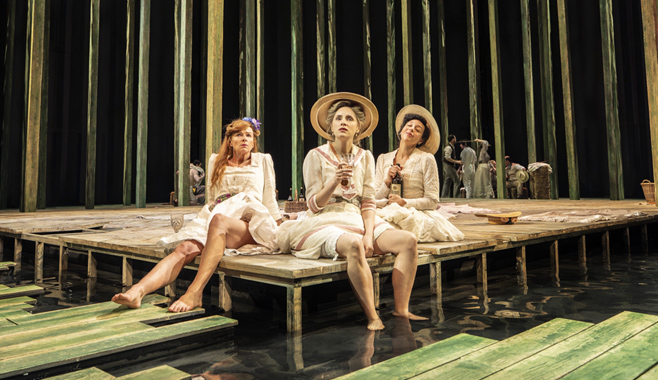
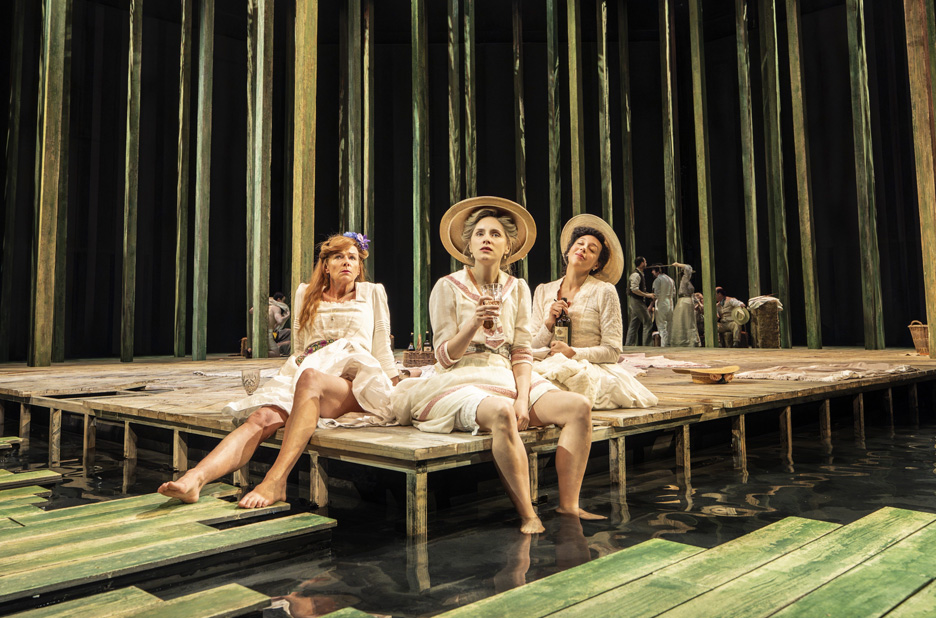
Choosing a marginal Russian play with a superficial resemblance to Chekhov in an attempt to woo the audiences with pretend progressive programming just seems silly. Sometimes authors and plays are rightly forgotten and no amount of clever modern updating can bolster their relevance or quality. There is a reason why in Russia Gorky is considered an author whose popularity is chiefly tied to his unwavering and blind allegiance to communism.
It is interesting to observe how time grinds even the most vigorous revolutionary posturing to dust. This is not a socially responsible version of Chekhov, it is simply a crude lookalike. In fact it only has the summer lethargy in the Russian countryside in common with some of Chekhov’s best. In the current political landscape, the National could have made any number of better decisions to highlight the quality of Russian culture and its tragic tendency to suffer autocracy and radical unrest, which we would do well to reflect on.
There is not much to be said about the adaptation by Nina and Moses Raine. There are a few laughs to be had, largely based on historically inaccurate revision, but they don’t lift the text sufficiently or provide the missing substance or structure. The ensemble does their best with very little. Alex Lawther’s Vlass and Justine Mitchell’s Maria are the only characters to offer some interest. Theirs is an unusual love story, impossible but tender, which stirs us from bored stupor to admire the interpretation. Peter McKintosh’s set is by far the most successful feature of the production. The ceiling-high mossy poles evoke a cool birch forest on the edge of a lake whose shallows are brought to the stage. The excitement due to the presence of real water on set does not make it into the play.
Last time I was thrilled and inspired by a National Theatre production was in 2016, incidentally on the very day the Brexit vote result was announced. Fittingly it was The Threepenny Opera, proving again that good art not only imitates life, but foretells our future.
After the interval, I suddenly noticed that a good number of seats were empty. There is only so much even the polite and ever accommodating London audience can take. I was hoping to write a very different review and would so like to see the National recover, but as things stand, audiences are better off seeking theatrical excellence elsewhere.