Book
Malgré tout (Always never)
Jordi Lafebre
5/5
Charming love story told in reverse
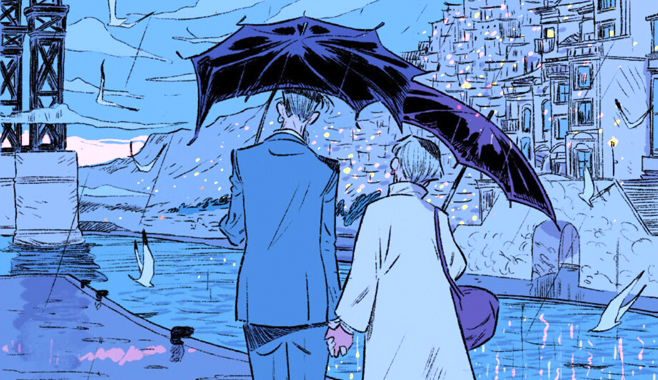
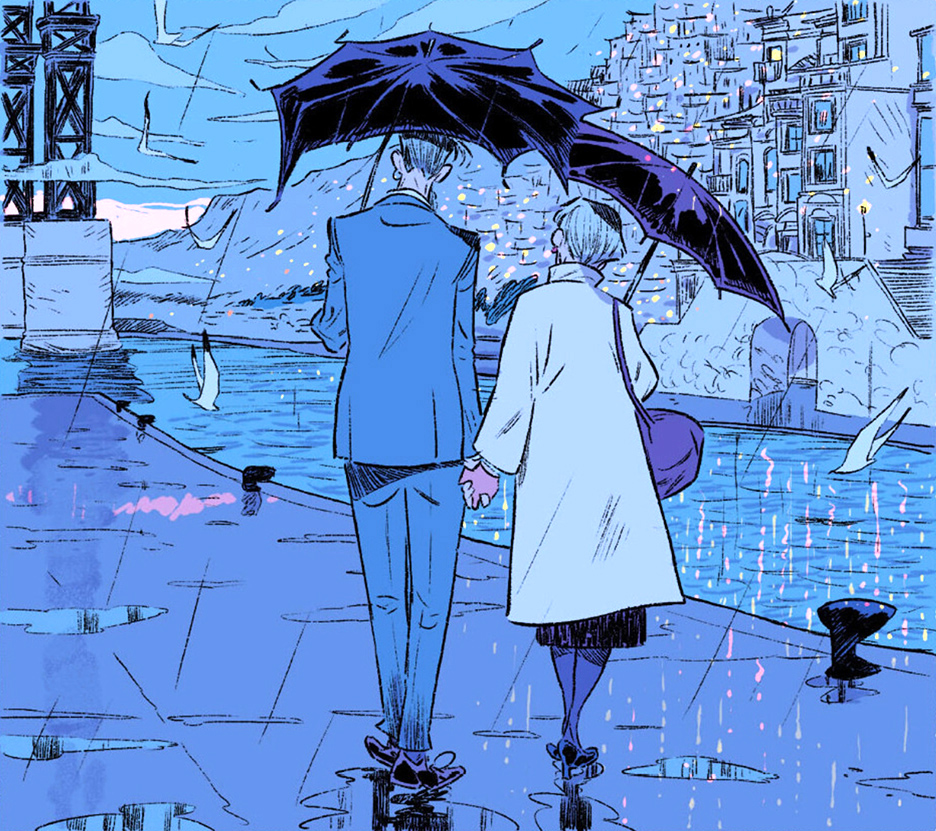
Jordi Lafebre’s delightful graphic novel about an unusual love story lifts our spirits and rewards our eyes and imagination. In a city of seagulls, somewhere on the Mediterranean coast, most likely in Italy, a smart and capable woman called Ana is retiring from her job as the city mayor and finally deciding to get together with the love of her life, Zeno. He is also ready at last to stop running away after vagabonding the seas over many years in the style of Corto Maltese (pirate earing included). From this point in the first chapter called chapter 20, we are taken through their story in reverse. Having to work that little bit harder to establish the timeline and understand the connections is gratifying, enhancing the humour, realism and gentleness of the narrative.
The English title Always never doesn’t work, trying to be too clever and not conveying the simplicity of the French Malgré tout (Despite everything). It is despite all the circumstances of their lives that Ana and Zeno manage to commit to their relationship after forty years. It is despite and against the global pandemic that this work was published in 2020 in French. In 2021 the album won the coveted Prix Albert-Uderzo, founded by the co-author of Astérix, the best-selling French comic book series of all time. The album was translated to English in 2022.
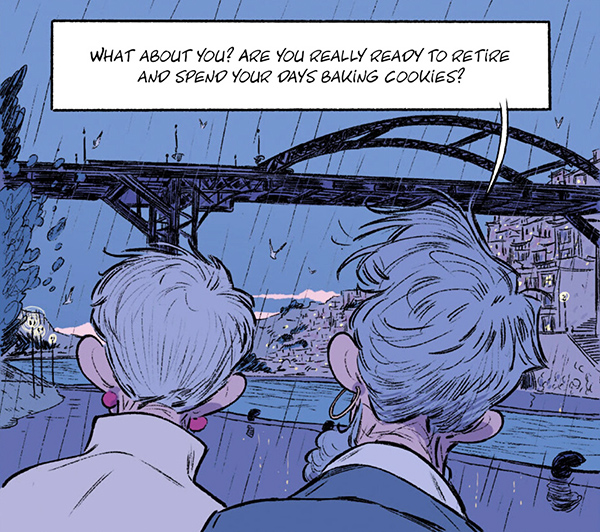
The drawing is beautiful, engrossing, tender and funny. Lafebre’s panels are dynamic and gorgeously balanced. Their proportions and framing adapt in the unique and best comic book tradition to fit the storytelling. I always really liked the wide frames which ignite the reader’s imagination and offer cinematographic context that can be unexpectedly revelatory and invite your mind to roam. Like digressions in non-graphic novels, these wide frames show details and beginnings which may not be followed, but that enrich the chosen narrative path. In Malgré tout the wide panels often feature atmospheric cityscapes of the ‘city of seagulls’ making us wonder which town inspired them.
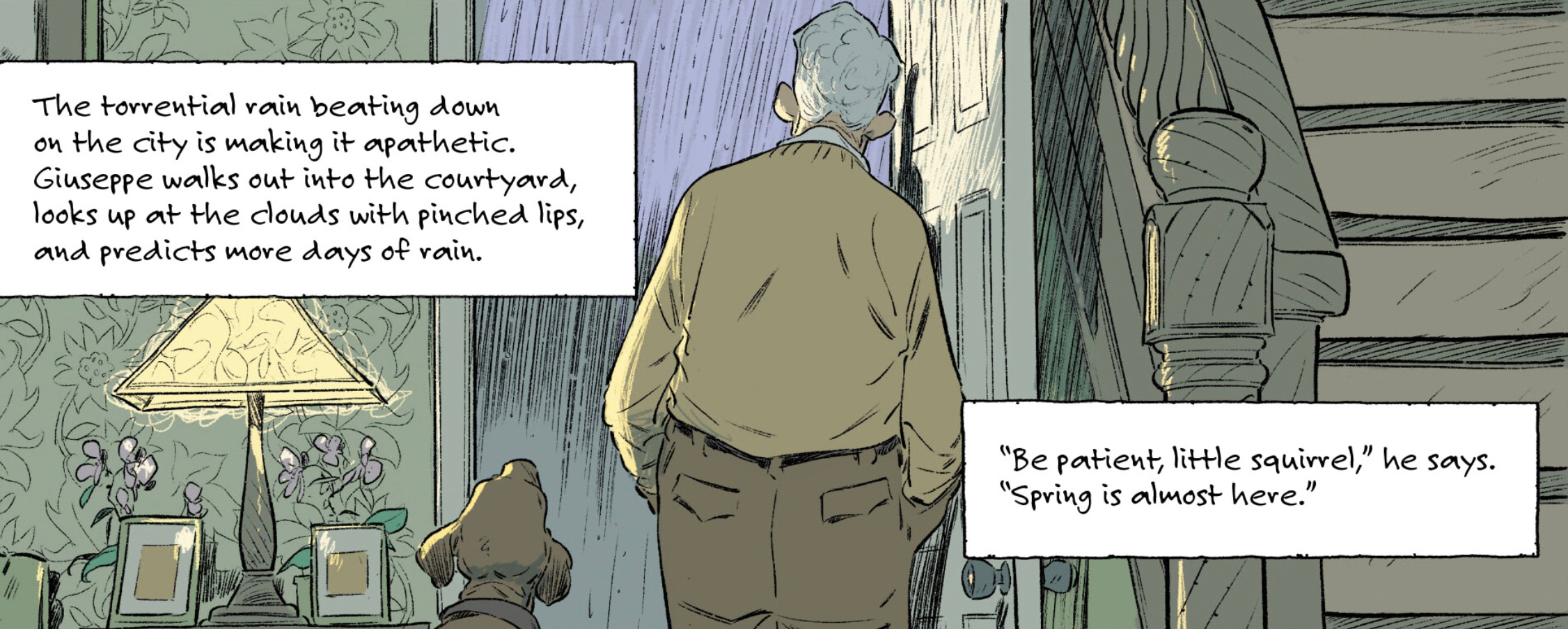
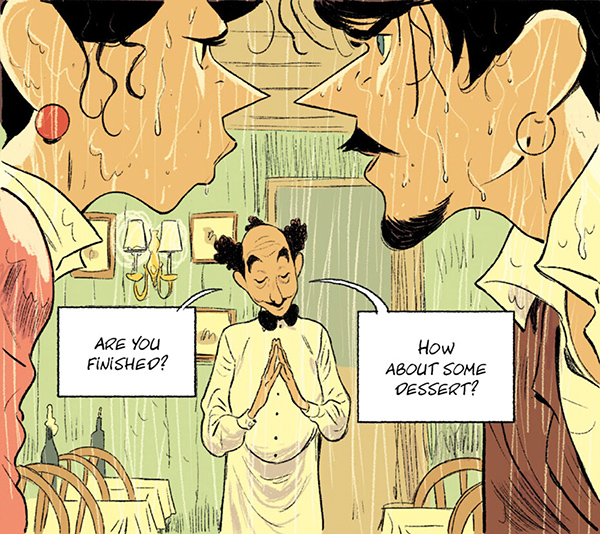
The faces of the characters are very expressive and convey their essence in the moment. Every so often Lefebre pictures his characters from behind, and by hiding their faces, and exquisitely drawing the back of their heads, he not only showcases his virtuosity but suggests how his characters see their environment and fit into it. Ana’s personality is realistically fleshed out as we see her subtly change over time and depending on who she is interacting with – her daughter, husband, co-workers or Zeno. She is the main actor who makes decisions and changes lives.
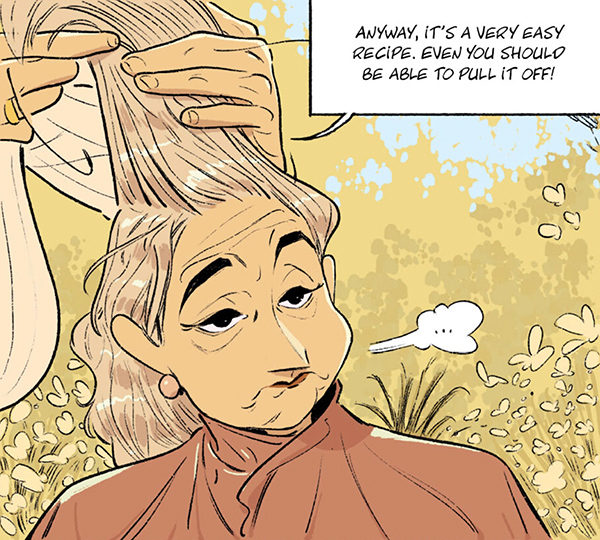
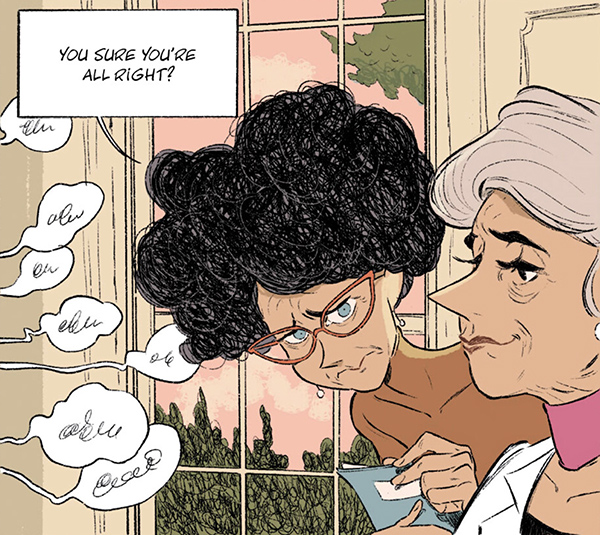
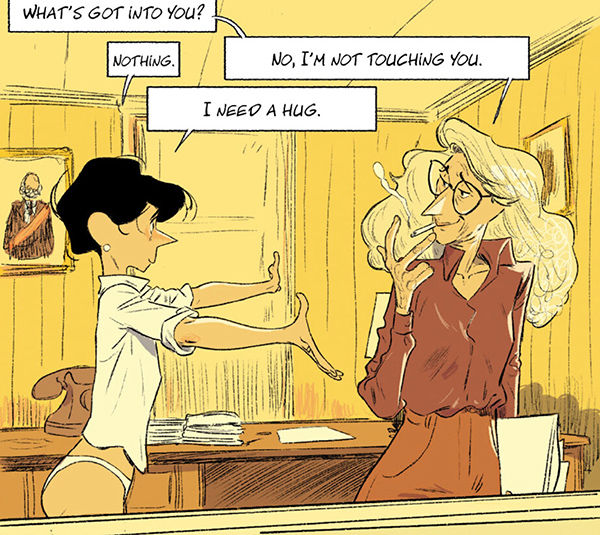
It is refreshing to see the empowerment of an older woman portrayed in a graphic novel drawn by a man. Not only does Ana have a high-powered job that she excels at, she is also able to choose what she wants for her retirement, going against traditional expectations.
The catch is that Ana has a loving husband and daughter. But the beauty of graphic novels is that such difficult situations can be left open or summarily resolved with poignant visual summaries. The seemingly happy end of the story of Ana and Zeno is at the beginning, and the explanations follow, filling in the gaps, describing the start and the unfolding of this life-long passion.
The warmth and intricacy of this graphic novel surprises. It takes great skill to create simple positivity that never feels sentimental or trite. Perhaps the graphic novel format is best suited to such a refreshing, humorous and unashamedly feelgood narrative.