Film
Through the Night (2023)
Delphine Girard
5/5
Credibility of truth
Keeping the viewer guessing throughout, this excellent debut feature written and directed by Delphine Girard explores how we can approach the truth in cases of rape. Devoid of unpleasant physical violence, the narrative drops nuggets of information like breadcrumbs while following the characters in the aftermath of the event. The story challenges viewers to consider who they instinctively believe and why, and what it takes for them to change their mind or reach certainty. It also quietly examines the consequences of trauma.


The tremendously tense initial scene of the emergency call the victim makes while still in the car with the perpetrator draws the viewer in immediately. At first we don’t understand at all what is going on, but gradually, together with the dispatcher, we piece together the outlines. Little do we know that the more substantial story will start after the rapist is arrested and the legal procedure has kicked in. The victim, Aly, sensitively portrayed by Selma Alaoui, wants to pursue the case at first, but when she senses that she is not believed, she backs down. However, in Belgium even if the victim does not press charges, the prosecutors are obliged to take the case forward.
Although we know rationally that this is one of the known traumatic responses, Ali’s passivity in the aftermath raises our suspicions as well as those of the female police investigator. She is not sure if she said no, not sure if she resisted, but certain that rape took place. On the surface the accused Dary (Guillaume Duhesme) seems beyond reproach as a calm and well-spoken fireman. Aly and Dary met through friends and have been flirting at various gatherings. They both wanted their relationship to go further. So what went wrong?
Two years later, when the case finally comes before the court, Dary is convicted of rape but shockingly only gets a suspended sentence. His aggressive shouting at Aly recorded in the emergency call is a key piece of evidence which enables the conviction. We are not certain about his guilt until he finally breaks down and admits to the rape to his mother. Towards the end the viewer is privileged to see a flashback of what actually happened. We see that Aly did say no repeatedly and clearly, even though she was not sure of it later. Nobody else apart from the viewer of the film has the certainty of this information. Prosecutors, family, friends, even the victim and the perpetrator themselves, everybody has to rely on their best judgment or what they can remember. This eloquently sums up not only the difficulty of prosecuting rape cases, but also of reaching some form of truth.
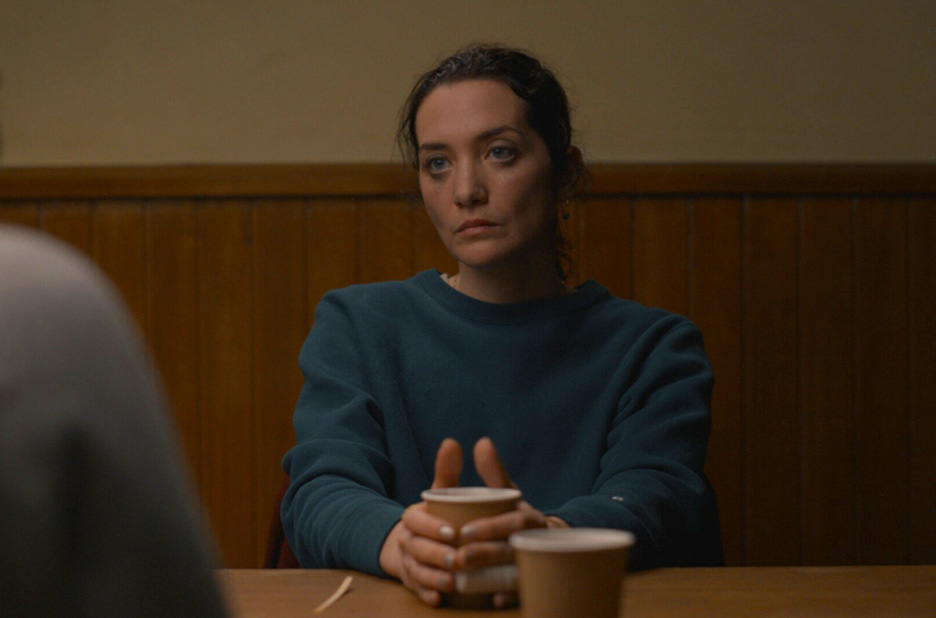
Girard used the same story for her short film Sister in 2018, but rightly felt that there is more she could explore in a longer format. In French the film is called Quitter la nuit which could be translated as Emerging from the night. Aly’s journey through the trauma, while not dwelt on beyond a few key milestones is lost in the English version of the title. Nevertheless Aly’s trauma forms the crucial background to the story as the pace slows down after the arrest, allowing the time needed for psychological recovery and for the justice to take its course. The dispatcher who took the emergency call, Anna, played by Veerle Baetens, decides to check up on Aly and they strike up a restorative friendship. At first Anna’s interest seems potentially sinister, but subsequently it turns out to be nothing but kind and genuine. It is briefly suggested that Anna had also gone through some traumas as a teenager and this contributes perhaps to her sensitivity and empathy with victims.
After he is convicted Dary feels compelled to see Aly and apologise. He knocks on her door, she doesn’t open at first, but when she eventually does, she asks him why he did it. He says that he doesn’t know. To this she responds with the most powerful line of the film, that it is not acceptable that he doesn’t know. Indeed as he knew he was guilty, why did he not self-reflect during the two years it took for the case to be prosecuted. Remorseful only after he has been convicted, Dary behaves just like any other cowardly criminal who claims his innocence.
This film shows persuasively how a victim instinctively has doubts and questions herself, which leads to others questioning her version of events, while the perpetrator displays convincing confidence. The grey areas in private emotional lives are plentiful and when a line is crossed, it is almost impossible to prove it or to give an unequivocal answer to whether consent was given or withdrawn at any point. The abuse of trust is arduous to confirm when the very trust is taken as an invitation for mistreatment. This smart and thought-provoking film stays with you long after the credit roll, triggering a reflection on the unpredictability and unknowability of human relationships which the justice system can only skirt over.