Art
Lee Miller
Tate Britain, London
4/5
Fearless and unconventional
The culmination of Lee Miller’s career was when she was photographed by David E. Scherman in Hitler’s bathtub, with führer’s photo leaning on the side and muddy boots in front, washing off the horrors just seen in the liberated Dachau concentration camp. If this was anybody else’s bathroom the photo would appear superficial, but it was Hitler’s posh bathroom on the eve of Second World War victory and on the day he committed suicide, and the timing is crucial. The image is disturbing as it is meant to be, mixing disgust, shock and enacting a seemingly deranged idea. In fact needing a bath in Munich in 1945 as part of advancing allied forces was not unusual at all. And it was difficult to find hot running water.
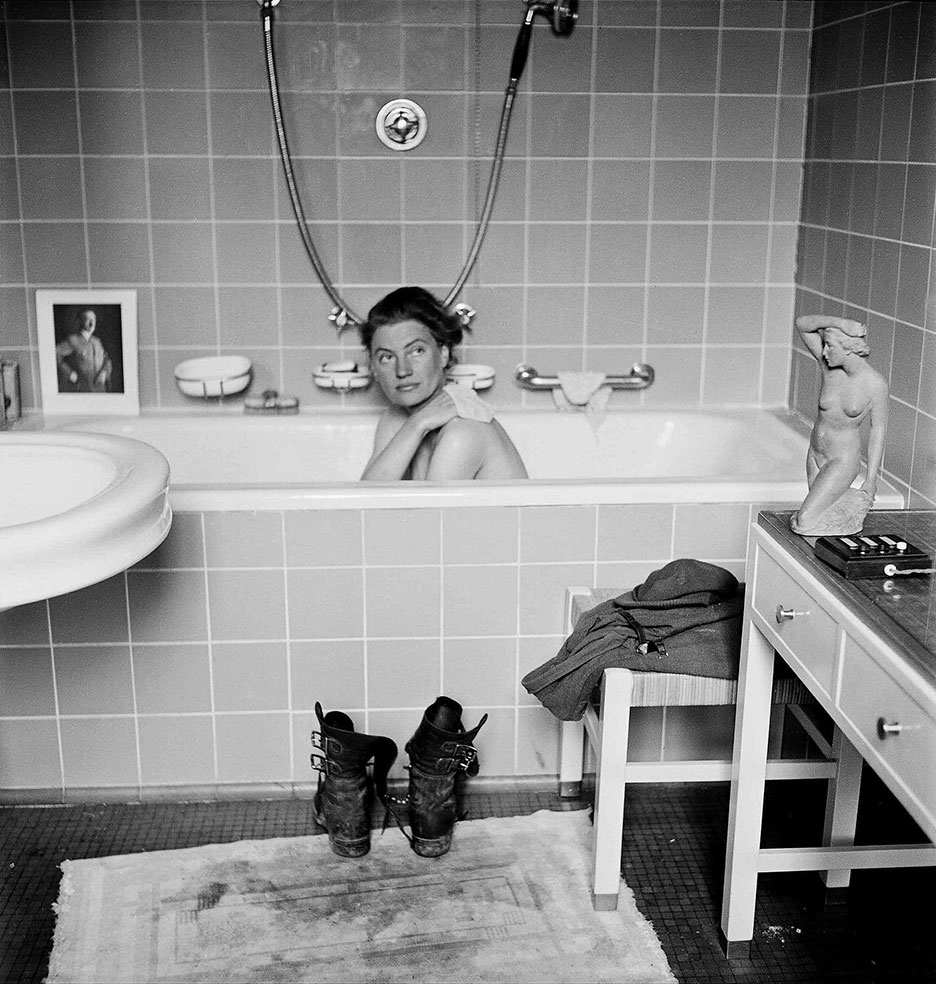
The image openly and satirically mixes in the kind of superficiality and sensuality that is expected of women. There you go, Miller seems to say, this is what you want to see, is it not? It must have been a repulsive image to see at the time, but Miller has never shied away from using her body both as an object and a subject in a way that foreshadows many later women artists. It is still a difficult subversive picture to understand fully, needing context, confusing our senses and feelings, and forcing us to face them and reflect on them.
The photo was released at the time when most people were just beginning to process the truth of the holocaust and to their credit Vogue actually published it in July 1945. Paradoxically the image Miller is most famous for was not taken by her. There is a complementary photo with Scherman in the same bath taken by Miller, but this is less successful as Scherman is not posing and his expression ambiguously and self-consciously hovers between laughter and discomfort. And a man having a bath is not as salacious or artistic as a pretty woman having one. But Scherman was Jewish, and that puts things in different light again.
Miller’s life was already colourful before she reached this point. This American woman originally embarked on a career as a fashion model, only to decide that she wanted to be on the other side of the camera. The highlights of her career took her from a sanitary pad model in America, to an apprentice and muse to Man Ray in Paris, to a Vogue fashion photographer in London, to a war correspondent in Europe. After the war she ended up as Lady Penrose cooking ‘historical’ dishes. A fall from grace if there ever was one. Many women had to retreat into the kitchen in the ‘housewife 50s’ after tasting during the war the kind of opportunities men were usually given. This retreat into a conventional role was in fact an attempt to recover from alcoholism which was the consequence of her PTSD. Still, it is a shame that Miller lost her indomitable spirit so early.
Miller featured in Jean Cocteau’s short film Le Sang d’un poète from 1930-32, playing a statue that comes to life after a poet covers her mouth with his bloody hand. It is a fascinating and well-filmed clip, but this misogynous Pygmalion only serves to highlight the road travelled by Miller, from an inanimate object in male fantasy to a tough war correspondent.
This vast retrospective of Miller’s work at the Tate Britain is very informative and interesting. Having developed her skills before the outbreak of the Second World War, Miller excelled at capturing the many different facets of the war years with bleak humour, insightful originality and unflinching sorrow. It appears that the collusion of her roles as model and photographer and her silence after the war made it more difficult for her contribution to be recognised.
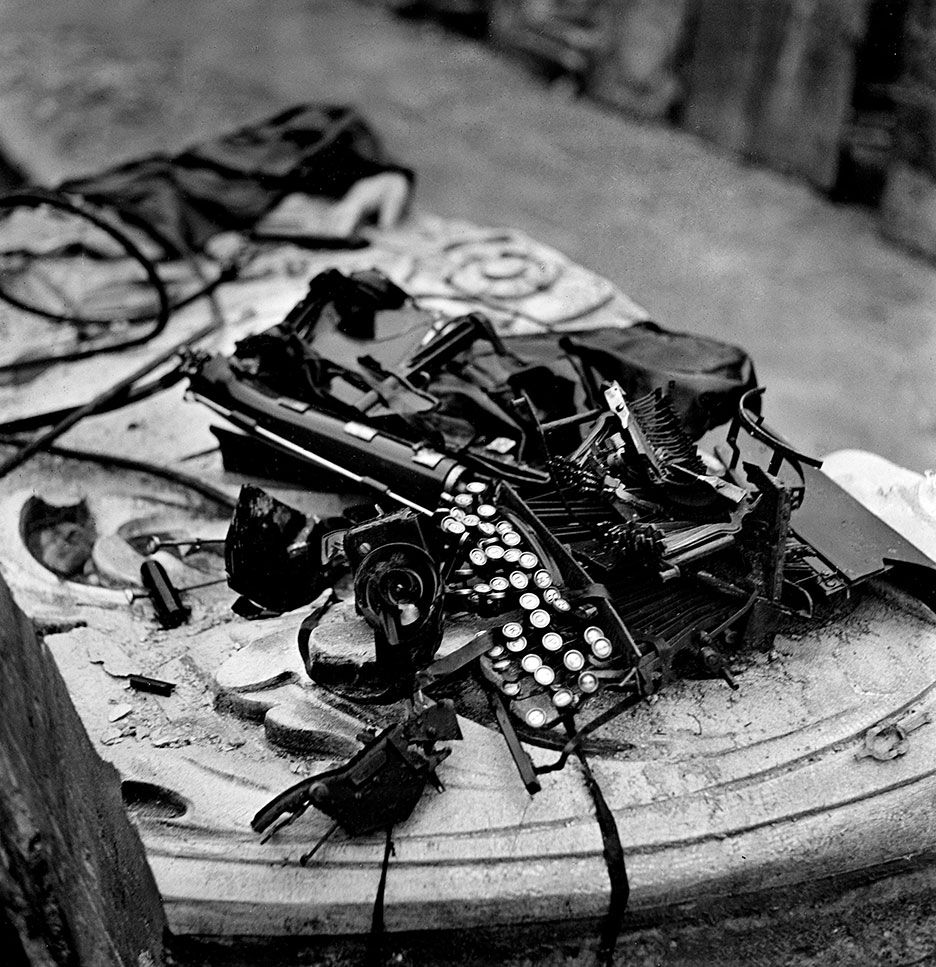
There are bleakly humorous images of London such as English Plumbing at its most fascinating, You will not lunch in Charlotte Street today and Remington Silent, all from 1940. They exemplify the defiant spirit that the authorities encouraged during the war. Circumstances aside these photos could have been taken today. The surrealist tendency to explore unusual objects still lurks in Remington Silent, a picture of an eviscerated typewriter which looks more like a strange giant insect.
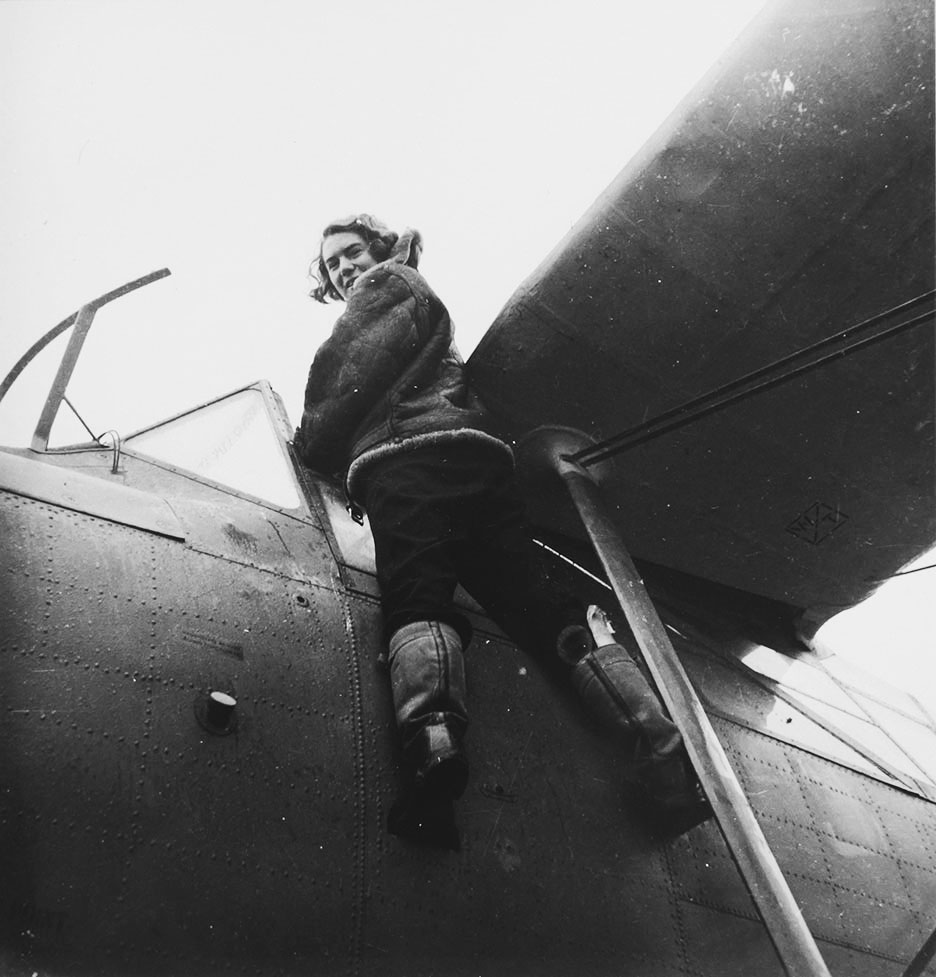
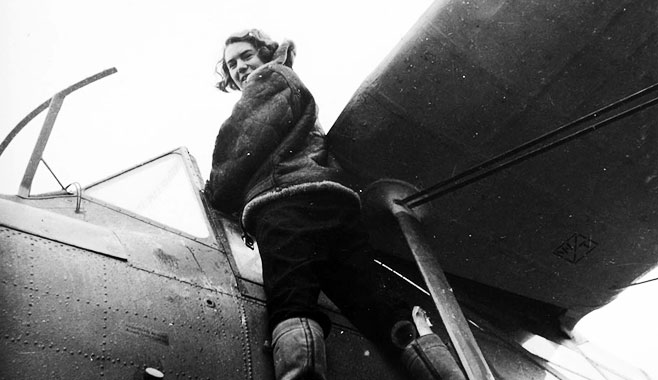
She photographed many Wrens and these images are feminist, defiant and striking. The photo of the pilot Anne Douglas from 1942 shows her climbing into an Albacore aircraft. Shot unflatteringly from below, her legs loom large, but the sturdy stability that they confirm, together with her confident natural posture turning towards the camera and the superiority of her elevated position ensure that this is an image of remarkable strength and modernity.
In addition to war photography, Miller made many portraits at various stages of her career. Perhaps the most poignant are the ones of the fellow artists Leonor Fini and Leonora Carrington taken just before the beginning of the war, capturing the sombre anxious mood. She was not frightened of taking unflattering photos such as the one of her first husband with his mouth distorted in an ungainly toothy smile, or the one of her second husband in bed with mumps looking like a wrapped-up granny, or her photo of Nusch Éluard, making this beautiful woman look uncanny and odd.
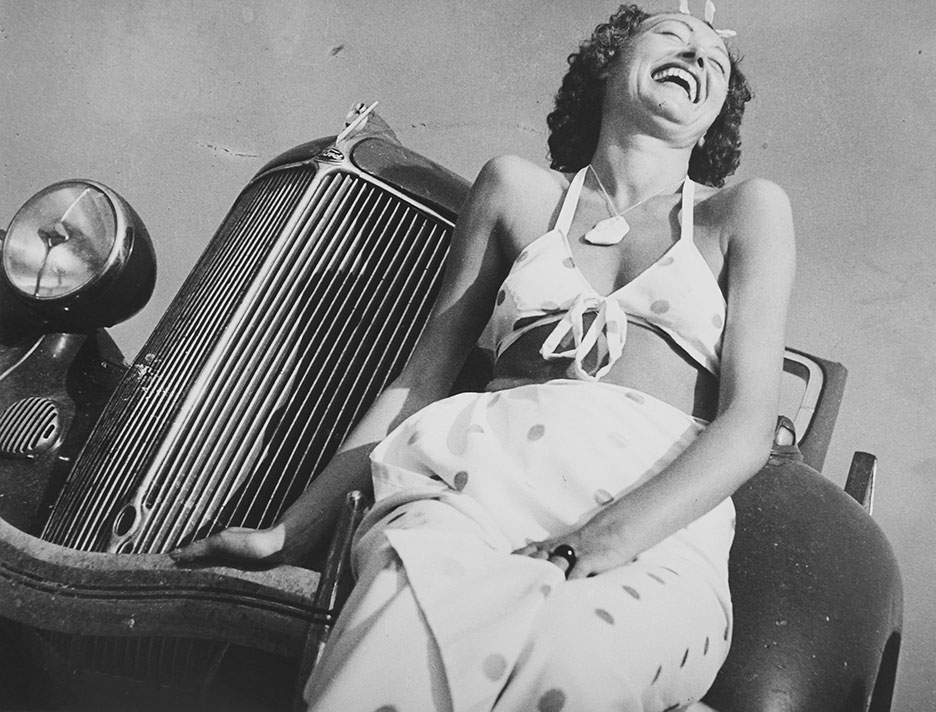
Another strand of Miller’s work were fashion images for Vogue. Somehow in the middle of the war it was important for Vogue to continue showing the latest fashions, and perhaps the women who read it found this a reassuring distraction. These beautifully structured photos taken on the streets of London seem to always have a reminder of the war somewhere in the background, either showing the Blitz rubble or propaganda posters on the buildings. Flamboyant hats are often worn, symbols of defiance, covering the head without really protecting it, but doing so with great panache. Even though these are fashion photographs, they are important and fascinating historical documents, with Miller in essence already creating reportage work.
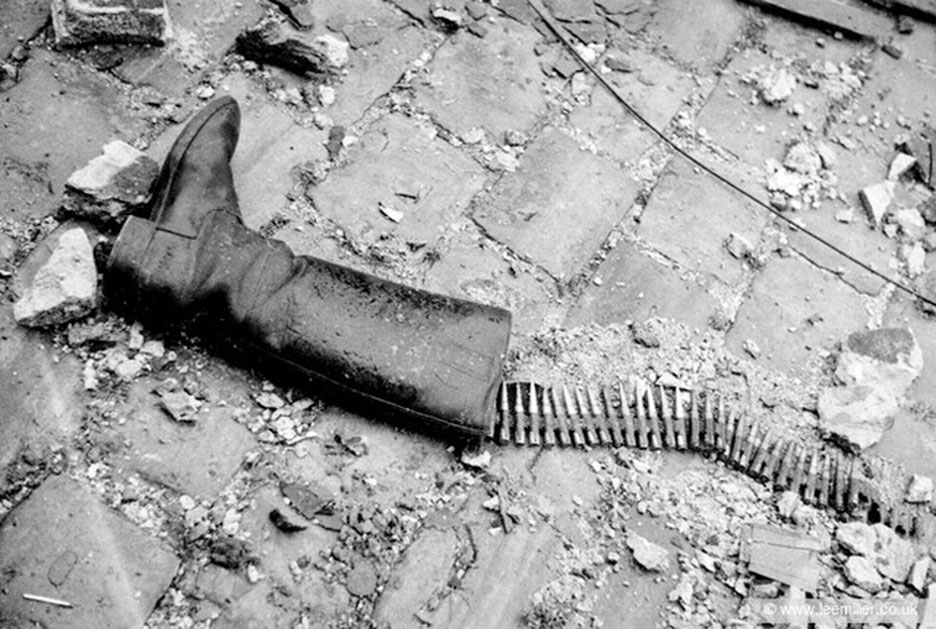
Finally there are powerful and disturbing photos at the end of war, of the concentration camps, but also of the lifeless bodies of the nazis who have committed suicide. Miller knew how important it was to capture these. They are stunning photographs of a horrible reality that must be seen and that testify to Miller’s fearlessness and desire to understand and communicate the complex reality of Second World War. Nevertheless, one of the most successful images of war is the more subtle Debris on pavement outside, shot in Saint-Malo in 1944, a montage ingeniously suggesting a random and tragic loss of life and limb. There is one more room of portraits of friends, but after the images of the concentration camps, one has no stomach for comparatively trivial home photography.
It is really difficult to place Lee Miller in an artistic context and evaluate her worth. Is she a precursor of today’s celebrities who make careers on little substance and skill? Is she a proverbial muse who never really managed to break free due to the misogyny of the time? Or is she in fact an accomplished war reporter who fought to be at the right place and the right time to do her best work? Perhaps all three are true but undoubtedly it is her work during the war that eclipses everything else.