Theatre
The Horse of Jenin
Bush Theatre, London
4/5
Inventive storytelling
Alaa Shehada, alone on a bare stage, offers us an original mix of standup comedy, moving mask mime, traditional dancing, and poignant and funny storytelling about growing up in the Occupied Palestine. It is a lesson to us all on how to build something meaningful from misery, something to allow a connection with others.


The evening starts with standup comedy and audience participation (my pet hate). Thankfully Shehada moves to storytelling fairly quickly. But in hindsight the standup prepares the audience to engage with the personal story which although told well, ultimately has tragic undertones and at times may seem distant from our daily lives. Throughout this fast and energetic piece Shehada holds our attention, not a foregone conclusion in a one-man show, but also transitions gracefully between different sections with a reflective pause and a glass of water.
The audience was an interesting mix of people with Middle Eastern connections, fringe and standup afficionados, hipsters, aspiring actors, locals, students, those who feel different and other ordinary theatre goers. One lady in the hijab in the front row proudly wore a watermelon badge thereby conveying her support for the city of Jenin known for its watermelons. With the current political situation in Palestine interest in this play goes well beyond theatre, so it becomes difficult to assess it solely on its artistic merits rather than also viewing it through the activist lens. But I think it serves the creators better in this case, as the situation is very much active, to steer well clear of cringeworthy virtue-signalling and consider what theatre does best which is allow the viewer to step into someone else’s shoes.
The horse of Jenin from the title is the ingenious five-metre-high sculpture made from the Palestinian war rubble in 2002 by the German sculptor Thomas Kilpper helped by local teenagers. It’s another example of fashioning something magical from misfortune and disaster, of reclaiming dignity in extreme circumstances, which becomes the main theme of the play. The Jenin locals adopted this sculpture as their own, placed in on a roundabout and when it was torn down by the Israeli forces in 2023, this was symbolic of many other losses on this territory. In Shehada’s story the horse of Jenin becomes a meeting place for his generation, a witness of their growing up, of their hopes and dreams. When the narrator’s best friend is killed, he enacts an imaginary vision of him riding away on the Jenin horse.
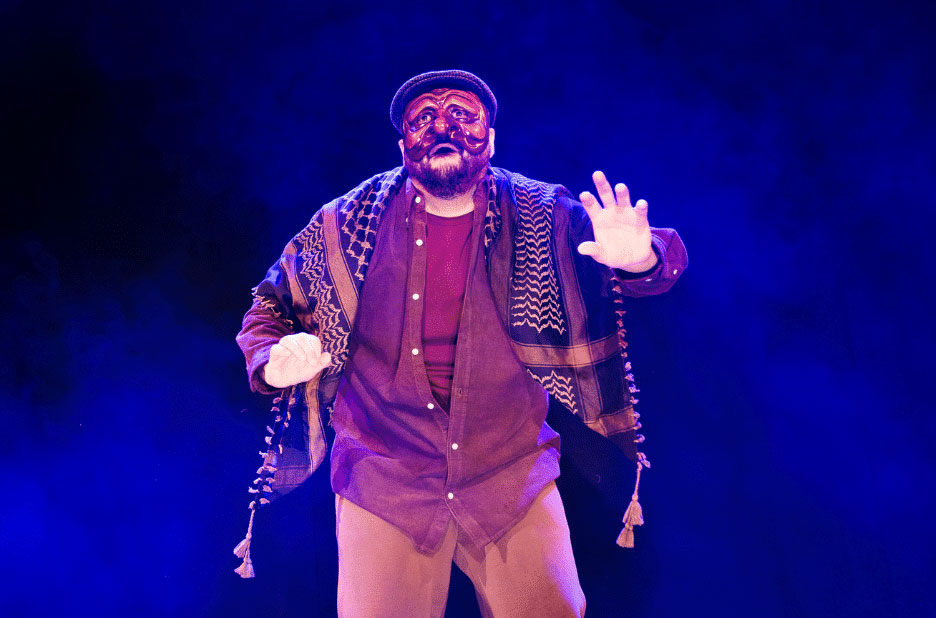
With a help of a mask, Shehada transforms and proceeds to use mime to softly conjure up friends, family members and sometimes officials. His technique is refined and spellbinding. In contrast to his mime, his standup challenges cultural stereotypes in a loud and extrovert manner.
The funniest sketch was about a self-centred English drama teacher who tells her Palestinian students that ‘the occupation is in the mind’ and gets them to hunt for their traumas in a new-age manner as if we are talking about small inconveniences which can be resolved with placebo and positive thinking. The most moving sketch was about the narrator’s grandfather, brought to life simply with a mask, scarf and mime, an almost silent portrait of a frail presence. Shehada’s mime was for me the most striking skill he brought to the evening which offset his standup beautifully.
The direction by Thomas van Ouwerkerk and Katrien van Beurden dexterously brought all the stands of the performance together. While the combination of the different styles was invigorating and original, communicating the message of vitality and highlighting other facets of different lives that deserve protection, it felt at times that the comedy left less space for more substantial matters. The laughter makes it easy for the spectators to absorb a more serious message, but I do like to see the audience stretched a little more. After all we come to theatre to be challenged as well as to appreciate and enjoy the creativity.
In the same vein, the boundary between the actor and the person was exposed and porous as befits a standup comedy act, but did it perhaps diminish the more serious story weaving? In other words did the actor’s exuberant standup based on his personal experiences get in the way of expressing more nuance? Either way Shehada really impressed and delighted with his ability to structure his performance and turn everyday life in Palestine into surprisingly hilarious, smart and touching comedy.