Theatre
Copenhagen
Hampstead Theatre, London
5/5
Pressing ethical questions
This excellent revival of Michael Frayn’s Copenhagen premiered in 1998 raises a multitude of pertinent questions showing that ethical complexities abound not only around the possible planet-changing uses of new scientific inventions but also in the everyday human struggles of deciding how to live. These questions are fully applicable to our current relationship with new technology and AI where the excitement so easily outruns and overshadows any ethical considerations.
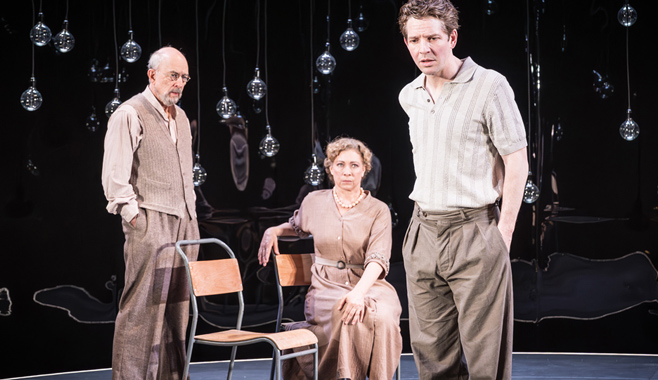
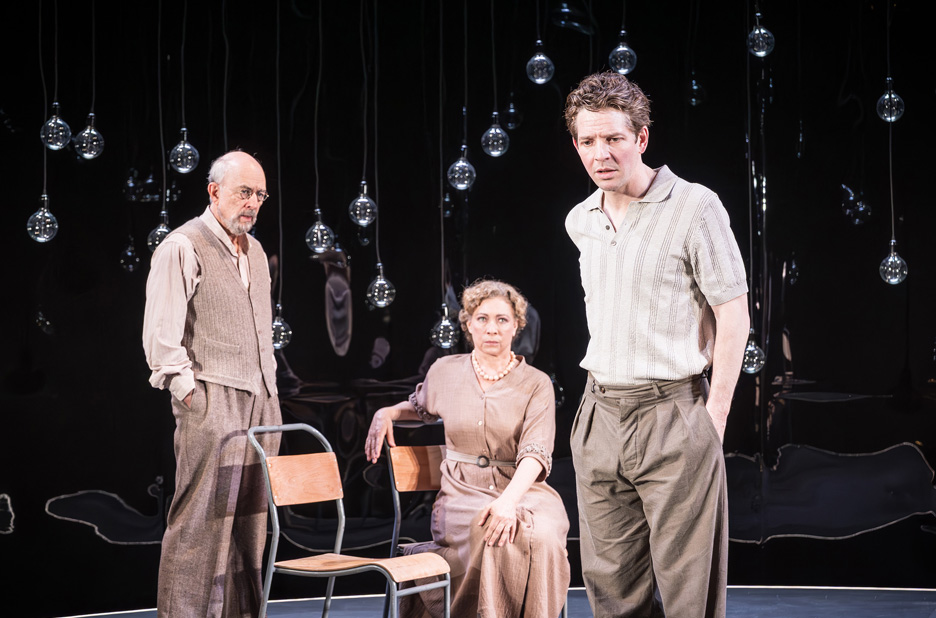
The play speculates on what could actually have been said during the controversial visit of the German physicist Werner Heisenberg to his former teacher, Danish physicist Niels Bohr, in Copenhagen in 1941, on the eve of the discoveries which paved the way for the lethal and tragic weaponisation of nuclear energy. Heisenberg and Bohr were very close, but when the Second World War started found themselves on opposite sides, the half-Jewish Bohr living in occupied Denmark while Heisenberg joined the German nuclear research programme. Later Bohr contributed to the Los Alamos project, so regardless of the historical bias, the hands of both men were stained by contributing in some way to the creation of nuclear weapons.
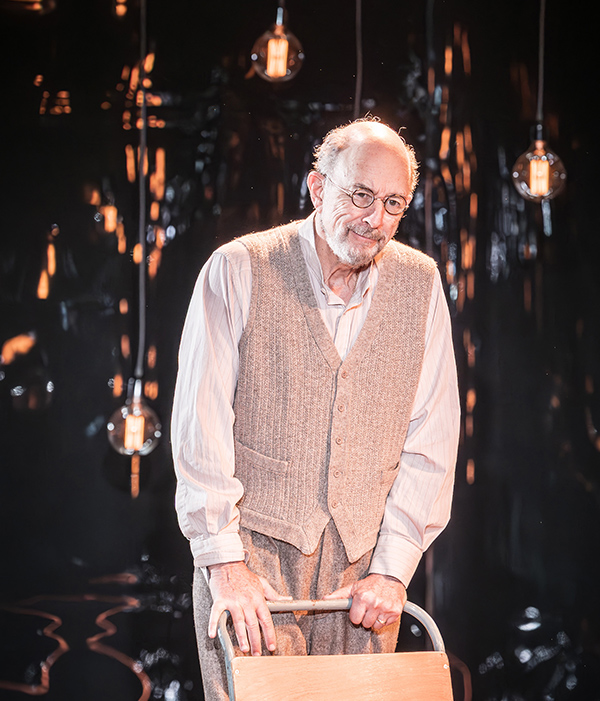
The trio of actors are well cast and impressive. It’s great to see Richard Schiff in London again. Bohr’s ‘heroical abstractions’ as his wife calls them are well suited to his distinctive displays of intellectual idealism and grouchiness. I can’t help remembering Schiff’s performance in Aaron Sorkin’s series West Wing where he also played an exacting intellectual character whose idealism and tetchiness mix naturally. In Copenhagen his mesmerising modulations of suppressed outrage and anger, alternating with weariness, irony and affection shape Bohr’s character persuasively.
Alex Kingston plays Niels Bohr’s long-suffering wife Margrethe with strength and character. Although her purpose is in part to elicit the explanation of scientific concepts in plain language, more importantly she is a catalyst in the relationship between the two men. She never liked Heisenberg, that much is clear, but she respects the camaraderie between the two men, all the while being on high alert as to their guests’ true intentions. We are after all in 1941, at the beginning of the war and Germany is doing well. It must have been impossible at this time to foresee whether Germany could be defeated.

Last but not least Damien Molony convinces as the dynamic confident Heisenberg, pacing elegantly and self-importantly on the outer moving ring of the imaginary atom. The three characters are equals and no one has the upper hand for too long, making this a realistic and universal conversation circling around the topic of personal responsibility.
Initially the focus is on Heisenberg’s intentions. As he is now leading a Nazi nuclear programme, his visit to Copenhagen in the middle of the war could not have been purely social. It is obvious that he has an agenda which may be official at least in part. He claimed later that he tried to stall his bosses as he didn’t want to build weapons, but how plausible is that in view of his obvious ambition and decision to remain in Germany?
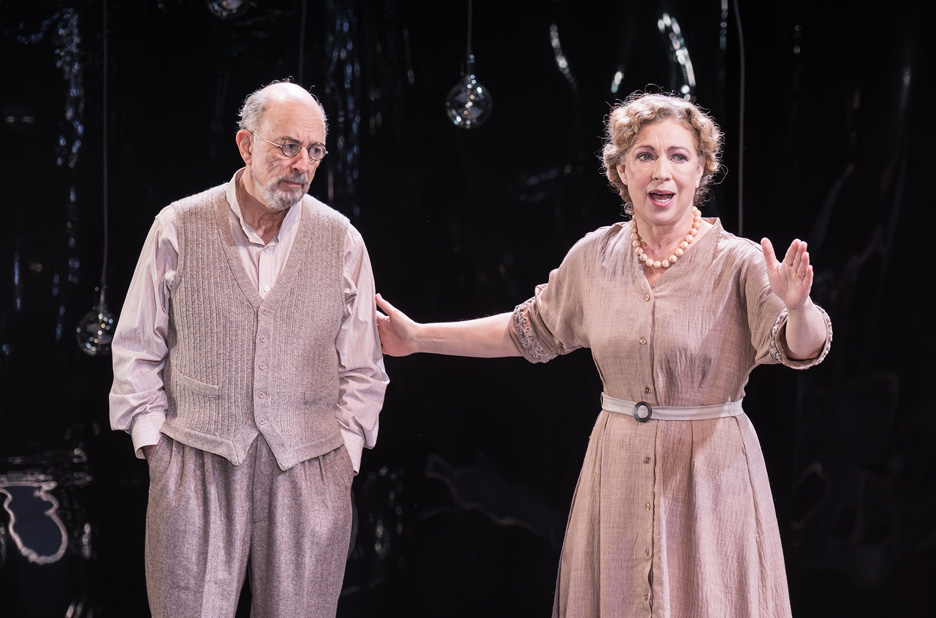
We are shown multiple variations of the same meeting, as the three characters try to remember or analyse more precisely what was said, but their every new attempt to recall and describe alters and skews the memory further. Was Heisenberg trying to protect himself in how he shaped his recollections after Germany had been defeated? Was the source of Bohr’s anger merely his confrontation with the despicable occupier, and the conflicting feelings of seeing his friend collaborating with the Nazis? Or is there more ego, competition and resentment sneaking up on everyone?
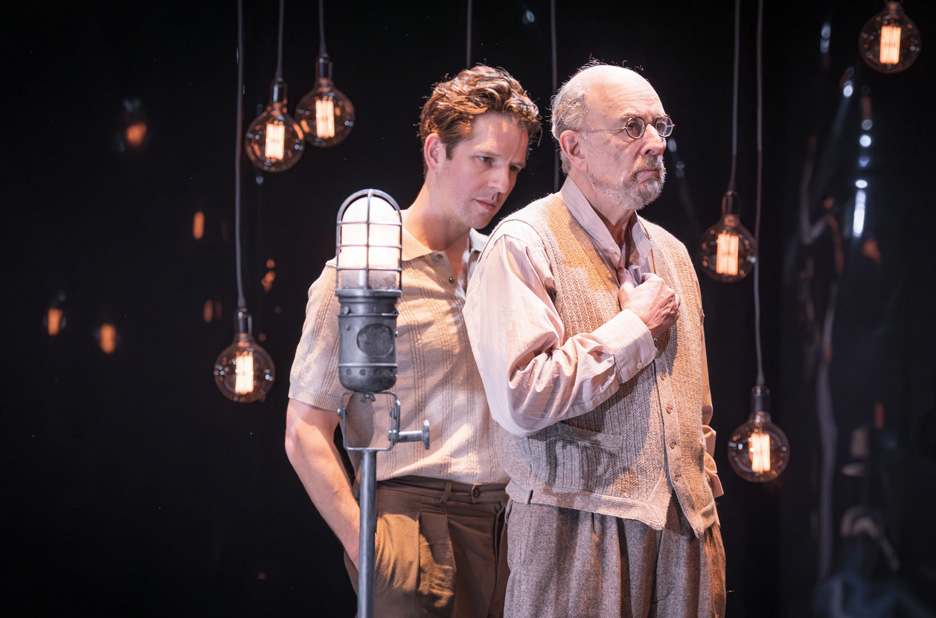
Later, the questions that remain when all others are exhausted are about accidental positive consequences. Did Bohr by refusing to listen to Heisenberg inadvertently prevent him from focusing on the necessary calculations and thus saved him from the responsibility of creating the most destructive weapon in history? Did Heisenberg save Bohr’s life by connecting him with officials in the German embassy in Copenhagen? We will never know.
When one thinks of the factual and ethical poverty of Oppenheimer, Christopher Nolan’s recent film on the same topic, which won every accolade under the sun, and yet barely contained a fraction of the critical thinking of Frayn’s Copenhagen, the contrast could not be starker. That we as a human race have created such an abominable weapon to kill each other cannot be cause for celebration or glorification, but only for sober reflection, and Frayn’s play, expertly moulded by the director Michael Longhurst, creates conditions for such thinking.
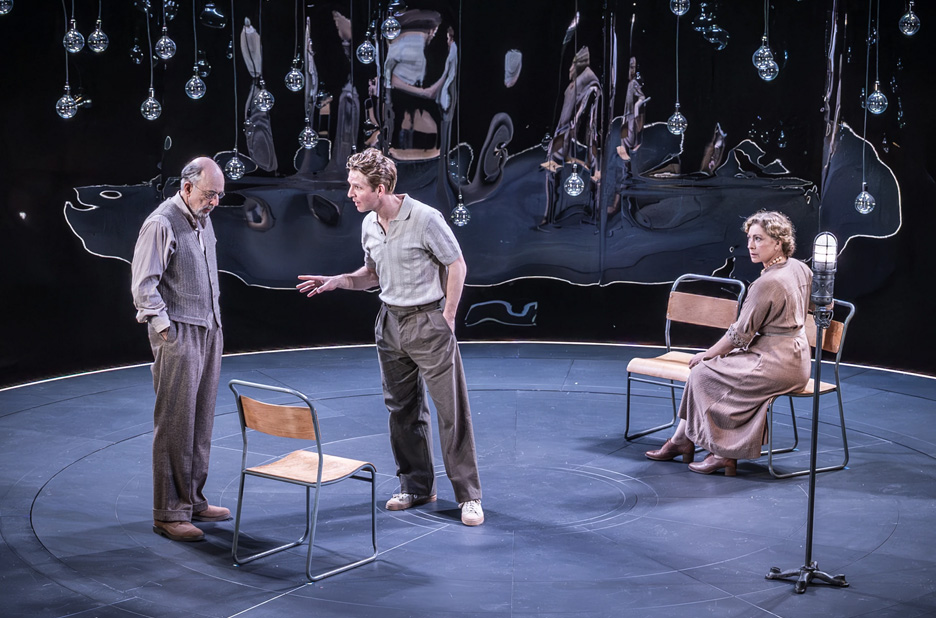
Joanna Scotcher’s set could not be simpler, a bare revolving disc with three basic school chairs, enhanced only by the atmospheric lights reflecting in warped glass and water in the background. In a single instance towards the end the lights abruptly intensify to evoke a nuclear explosion which strikes our senses powerfully. A potent reminder of the instability of our world.