Art
Permanent collection
Mauritshuis, The Hague
5/5
Private Golden Age
The famous Mauritshuis enthrals, but not in the way expected. It is a feast of still lifes, petite, luxuriously detailed, ever-so-slightly melancholic vanities, reminders that time passes and sweeps it all away. One Rachel Ruysch is on view, a wilder bouquet than that of her male peers, the nature more surprising in its unruly creativity. Two small landscape works by Jan van Huysum communicate across the wall, one of fruit, the other of flowers, both sunny and luscious, perfectly constructed – still and moving.
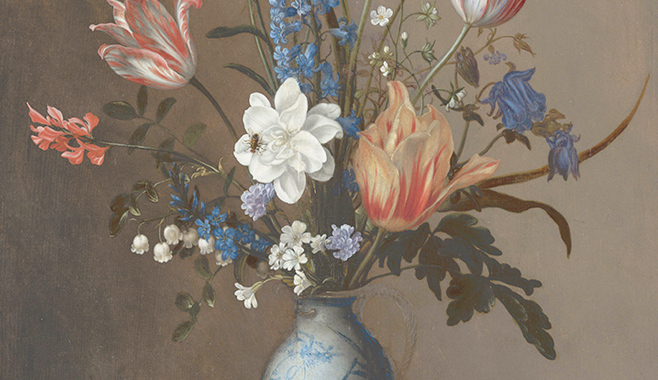
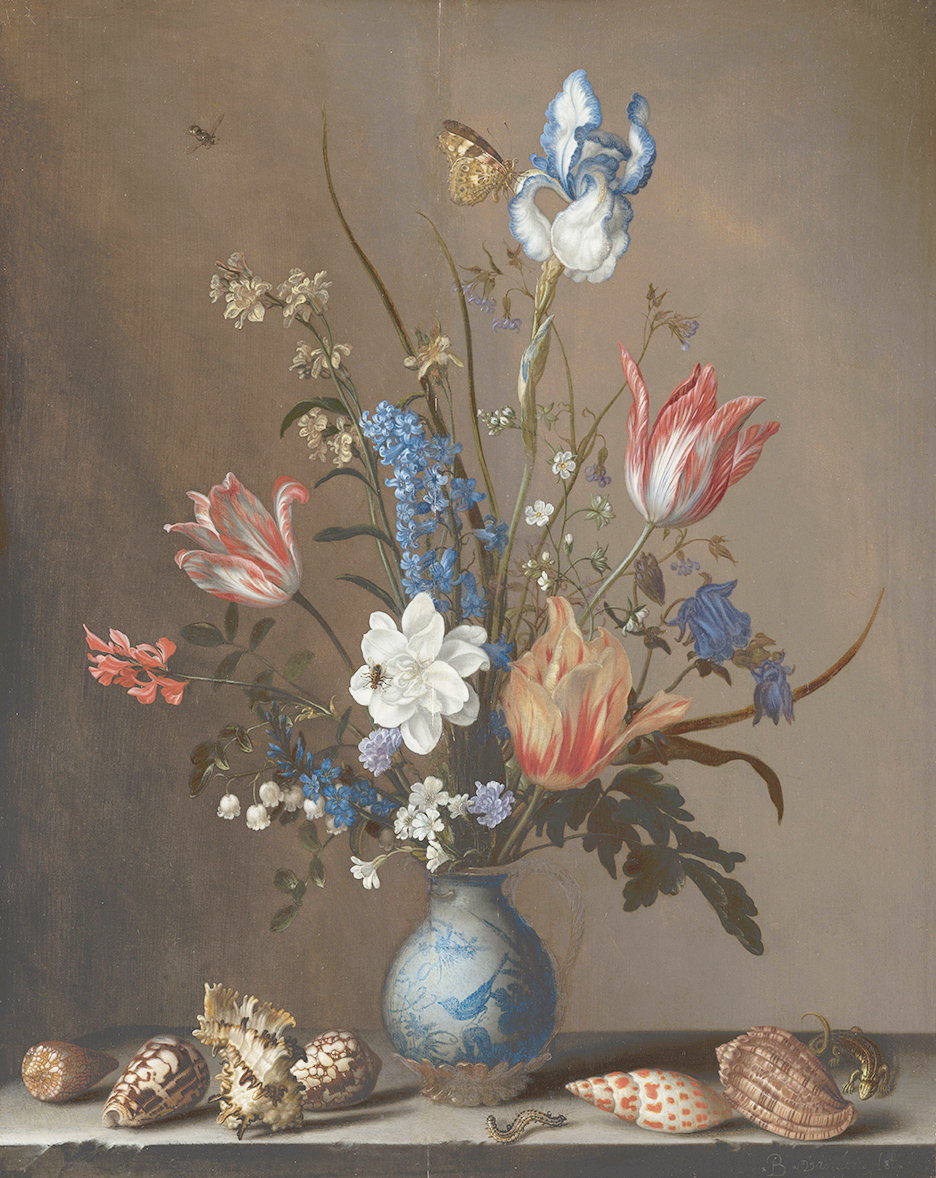
Balthasar van der Ast offers us beautiful delicate still lifes with flowers and sometimes shells. They radiate sumptuous pastels. His lone tulip in a vase is a picture of perfection, but it gets even better with Flowers in a Wan-Li Vase, with Shells, the blues and reds finely balanced, tame but vibrant on a taupe background. The common view is that Dutch painted such an abundance of floral still lifes in the 17th century to celebrate their wealth, but perhaps in this fortuitous confluence of reasons why this particular subject was so successful and prized, it is easy to omit the aesthetic that formed appreciating this kind of beauty and not burdening it with too much hidden meaning. At the same time, although these paintings are easy to like, they also offer layers of skill and visual pleasure.
One thing most of these paintings have in common is that they are much more impressive in person than in reproduction and that certainly applies to the late Rembrandt self-portrait on view, a resigned, quizzical but stoical picture of vulnerability under the weight of life. I have always preferred Rubens’s vitality to Rembrandt’s self-pity, but this self-portrait is one of his best, a picture of how we feel when there isn’t much more we can do, but we still can’t stop surveying our predicament.
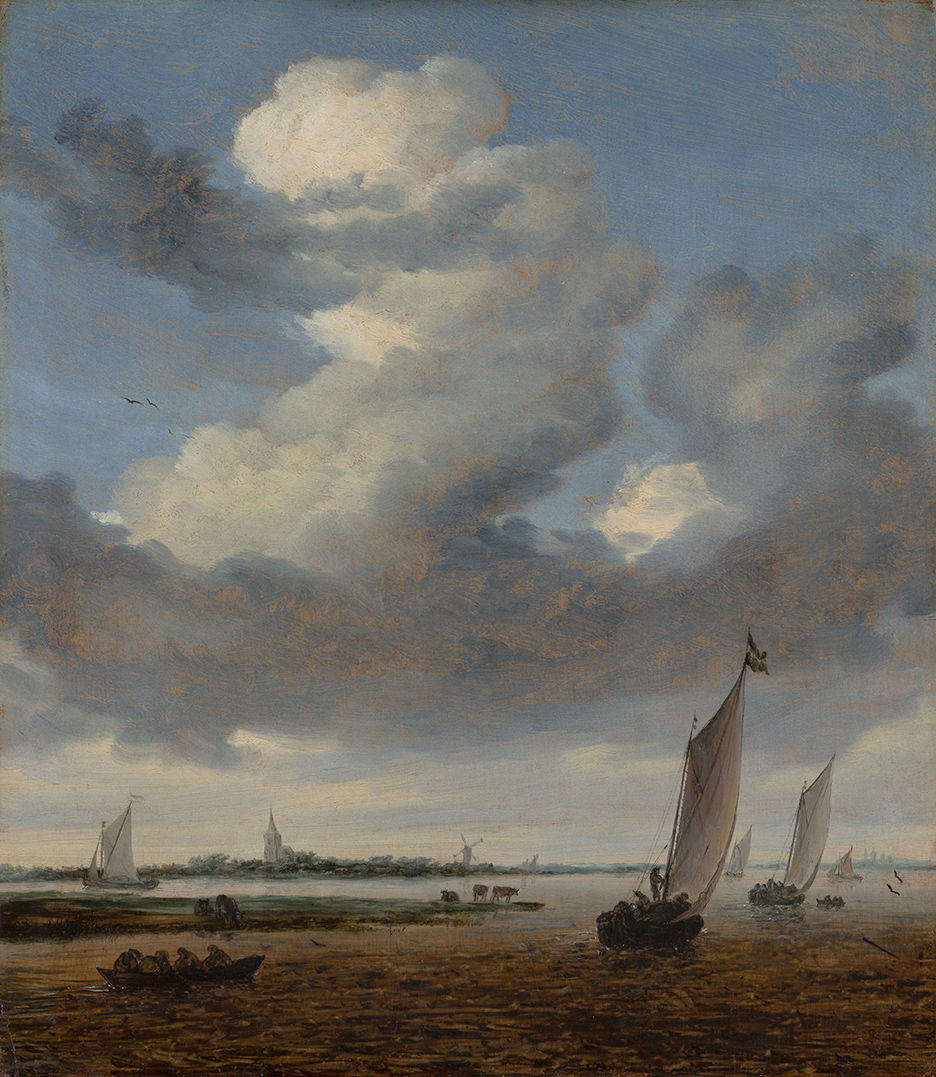
A Ruysdael landscape View of Beverwijk from the Wijkermeer is a simple view in appearance but with a satisfyingly rich colour effect. Ruysdael always starts humble and then grows in front of your eyes, in depth, colour and texture.
Judith Leyster’s small and plain canvas of female resistance, through needlework indeed, is an image of strength by stealth.
The plainness of the famous Goldfinch by Carel Fabritius surprises. It hides sentimentality like a good plain Dutch church, but the bird’s expression is skilfully hazy, only its natural proud posture a sign of instinctive determination to survive. It is a fascinating exercise in minimal meaning suitable to break through in our noisy age of excess and vanity.
It is one of the very few surviving canvases by Fabritius who lost his life at 32 along with most of his paintings in the gunpowder explosion in Delft in 1654. A pilgrimage to his last self-portrait at the National Gallery in London needs to be made in quick succession, completing the earthy perspicuous balance. Impossible not to make a connection for a second at least between a cruelly chained bird and a self-captured painter.
Vermeer’s super-famous girl with a pearl earring disappoints. It is too superficially pretty and flat. The mastery of the View of Delft however is stunning. The representation of light with carefully selected targets for its warmth holds the eye for a while. If you look at it long enough it seems as if the light is delicately changing, imperceptibly glimmering at the edge of the overcast sky. The yellow pane does indeed exist and a search for it makes sense. Up close the brushwork seems messy and muddy, but from a suitable distance the depiction of light is impressively refined.
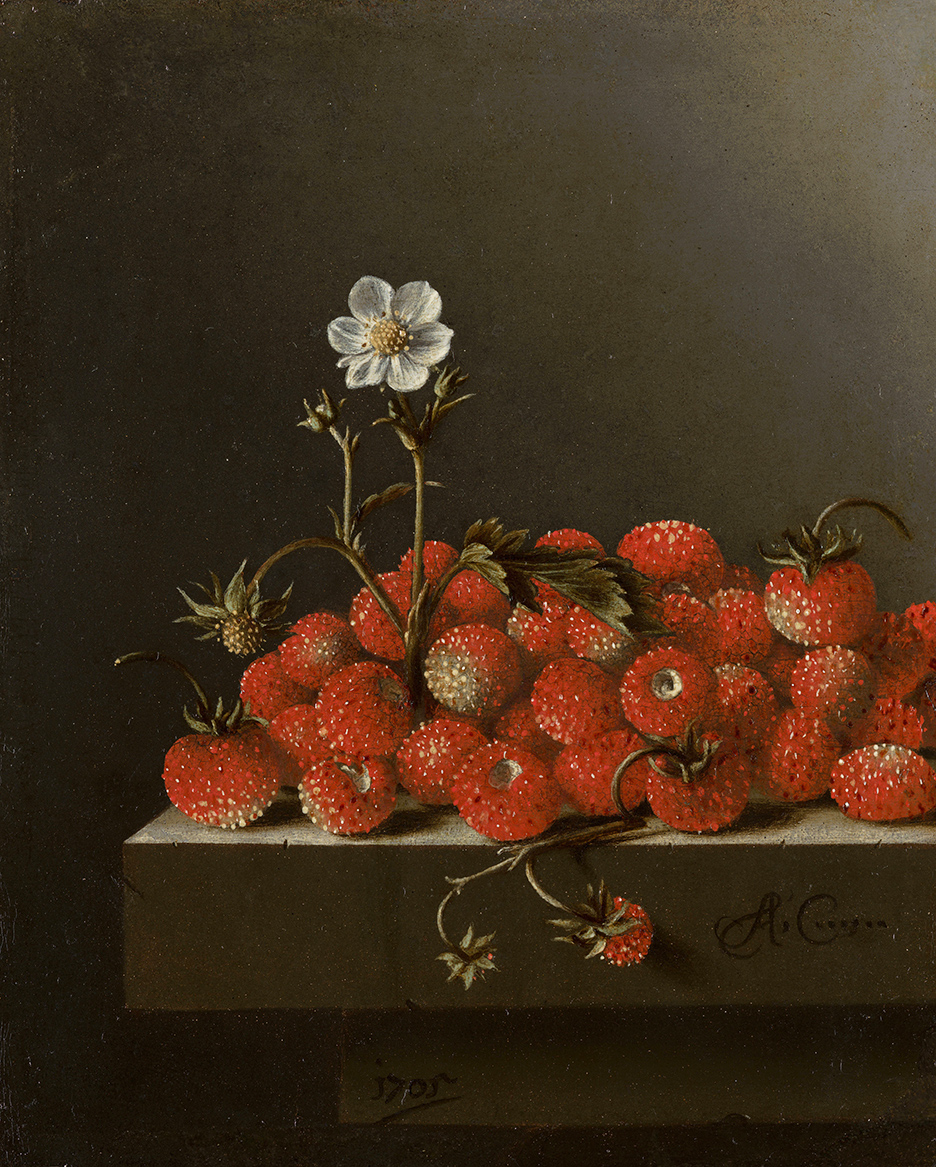
But it is Adriaen Coorte’s two small and superbly detailed still lifes of fruit that rise above all else. This mysterious man from the picturesque little town of Middelburg in the middle of the flat wind-swept Zeeland had an eye for simplicity that is an answer to everything. His fruit is humble, but shines with reddish warmth and proves human precision matters. Humility and pride in one. That which is from the earth is worth celebrating in its delicacy and vitality.