Theatre
Arcadia
The Old Vic, London
4/5
Stoppard’s greatest is with us again
Tom Stoppard’s finest play gets a long-awaited airing in the closeness of ‘in the round’ staging at the Old Vic. In an English country house two strands of the story unfold two centuries apart. In 1809 a young maths prodigy Thomasina Coverly is tutored by Septimus Hodge surrounded by relationship intrigues between the adults of the household. In the 1990s literary academics Hannah Jarvis and Bernard Nightingale compete in trying to decipher what happened in 1809 and to use it to their advantage. Comically and poignantly they are often wrong and occasionally unintentionally correct. The writing is sublime – witty and profound in turn – making this one of those plays which is all about the dialogue and whose success can largely be measured by the degree of faithfulness to the text.
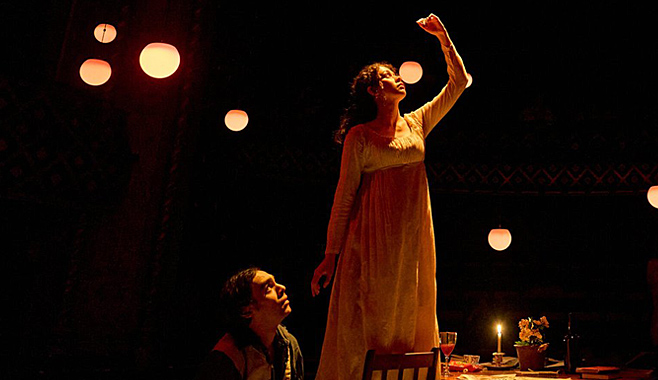
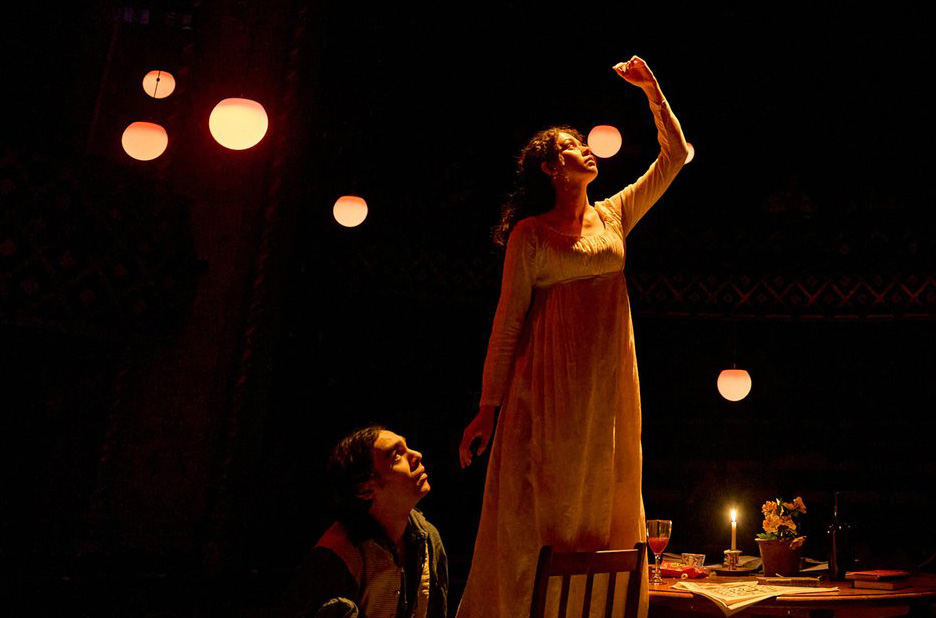
Advertised as a sexy play, Arcadia is in fact a play where sex is only wittily talked about as a smokescreen, softening the audience to trick them into absorbing a myriad of interesting ideas about science and the nature of knowledge. When you ‘just know’ that something is true, your chances of being right are as high as when you have reached your conclusion arduously and with plentiful empirical proof. In addition, the next generation can so easily disprove any understanding that has been painstakingly built with all available but often and inevitably randomly selected evidence. Thus truth and knowledge are highly elusive. And is to know someone carnally also a form of knowledge? We don’t get a definitive answer, but it seems to be a no.
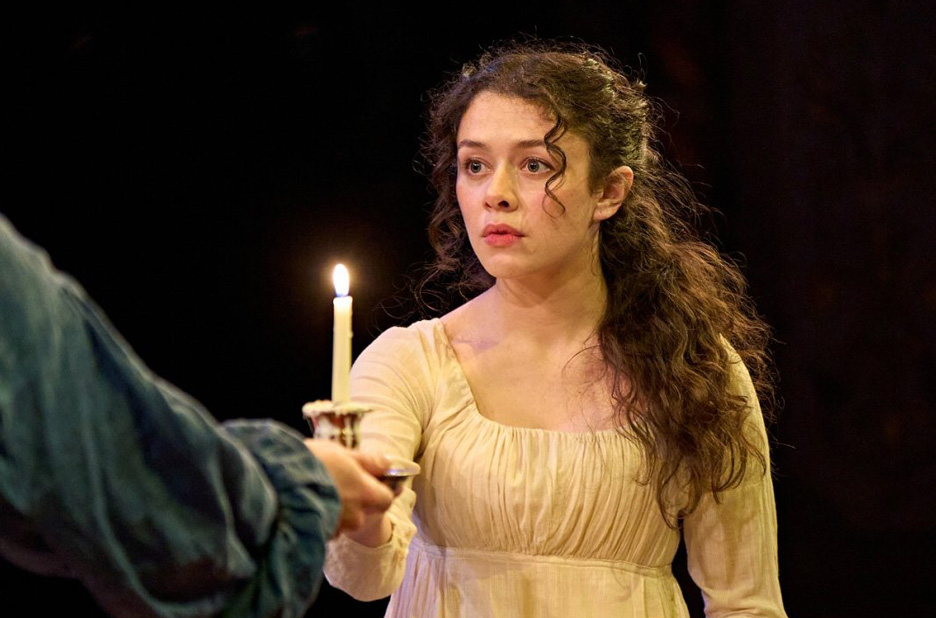
Thomasina (excellent Isis Hainsworth) and Septimus (a measured no-excess performance from Seamus Dillane) are the heart of the play and their relationship the authentic core around which other characters revolve. Hainsworth’s Thomasina is smart, funny and touching, distilling the essence of an endearing 13-year-old who is quickly developing her knowledge of science and the world. It is her destiny that is grounding the play and the one we care about the most. Dillane plays Septimus not as much as a seductive rake as previous incarnations of this role would have it, but as a smooth and somewhat reserved intelligent young man who doesn’t lack kindness but whose main defence is sharp wit as he continues to service the rich and enjoy the sexual perks of the job. The quiet climax of this fast-paced play is at the end when Septimus realises the extent of Thomasina’s brilliance, as a budding scientist as well as a person.

Back in the 20th century, Hannah (disabused and often expressionless Leila Farzad) and Bernard (appropriately funny and annoying Prasanna Puwanarajah) continue to spar entertainingly. Puwanarajah accentuates Bernard’s thick-skinned narcissism at the expense of the character’s deviousness rendering him more pitiful than charming. Farzad’s Hannah is contemptuous of rather than outraged by Bernard’s vulgar misogyny, never withdrawing her help, but landing good verbal punches along the way. Unfortunately hers was the weakest performance in the mix, but the role is equally the hardest to play. Her lines were delivered well but unmatched by her stage presence.
Sex talk is just rhetoric or ‘performance art’ as Hannah terms it, organic part of Bernard’s bullying tactics. ‘A gibe is not a rebuttal’ as Thomasina astutely points out and this applies to Septimus as well as Bernard, and self-mockingly to the playwright too. But a gibe is so much funnier than a rebuttal.
The 20th century characters have taken on partial characteristics of their Georgian era counterparts, but they can never become as fully rounded as their predecessors while they continue to look into the past to try to interpret it. This could be said to be an accurate portrayal of the way the British still culturally relate to themselves.

In fact, the relationship between the present and the past, their co-existence in particular, could have been more creatively displayed on stage. In incidental commentary on its evolution, the aristocracy in the 20th century are represented by the Coverly offspring, Valentine, Gus and Chloë, all suitably sweetly eccentric and marginal. The strongest character of the three, Valentine (impressively and thoughtfully embodied as a young student of science on the spectrum by Angus Cooper), inheritor of Thomasina’s scientific talents and Hannah’s intellectual equal, explains – very well indeed – many of the scientific concepts which permeate the play and which can all be traced back to Thomasina.
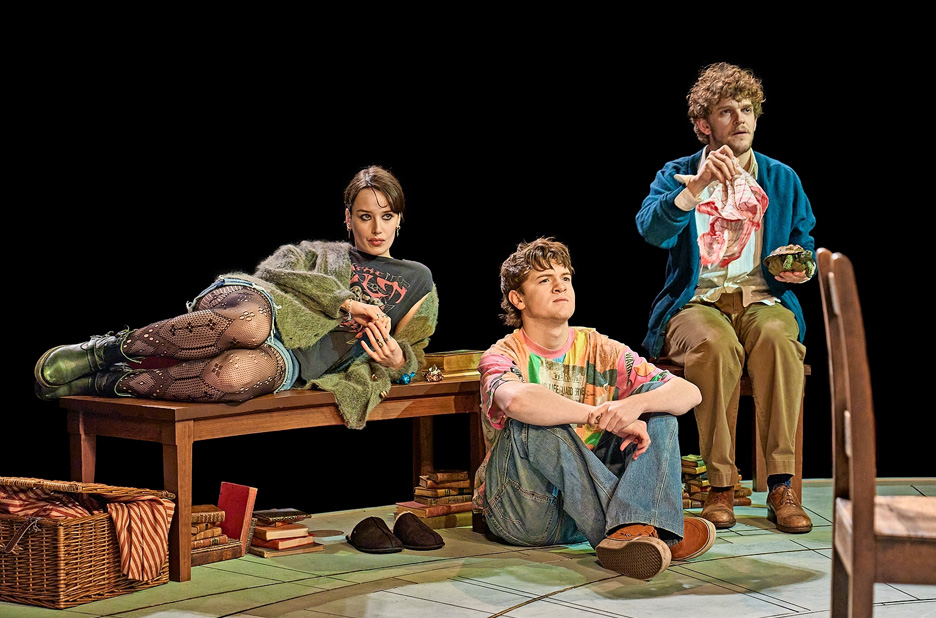
Arcadia nurtures Stoppard’s most complete and modern female characters, Thomasina and Hannah. Although I’m still waiting for a performance that will show off Hannah’s strength more explicitly and likably, which is probably unrealistic as the playwright did not intend this, I am always captivated by how Thomasina, despite all the restrictions of her era, effortlessly shines as a true original amid the prosaic aristocracy. Her wonderful lines disparaging Cleopatra, feminist and child-like at the same time, reveal her frustration at not being taken seriously as a young woman. She is unconsolable for the losses of the famous library in Alexandria which happened centuries ago. Her abilities are vindicated even if in her own time she was only seen as marriage material and a precocious daughter who must learn to hide her intellectual superiority – a skill Hannah definitely mastered two hundred years later. The values of Enlightenment and Romanticism collide and mix, and the female characters in particular are highlighted as predominantly rational against the more cynical romanticised attitudes of some of their male counterparts – in a pleasing reversal of the usual gender stereotypes.
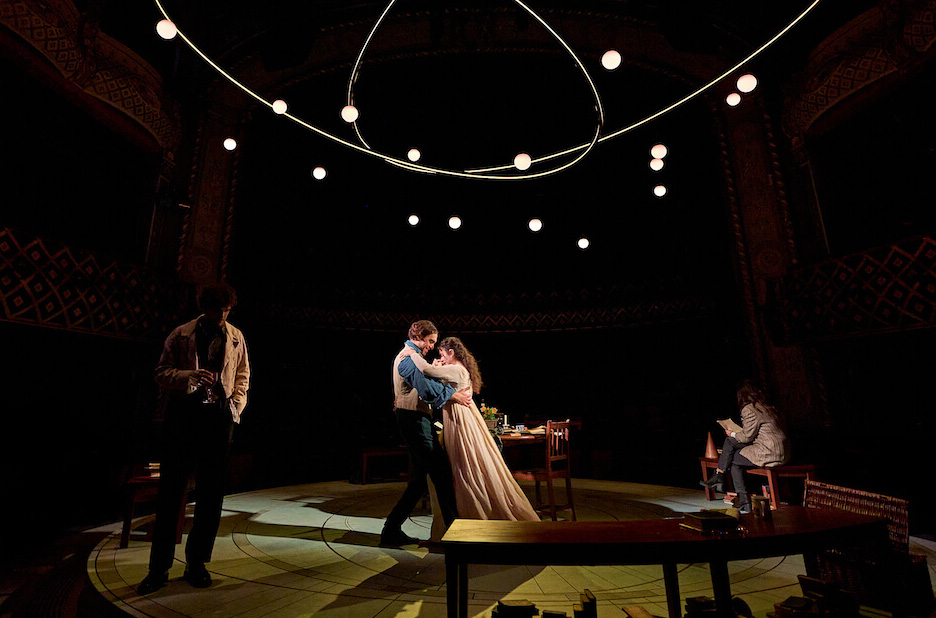
Carrie Cracknell’s no-nonsense direction, staying true to the text, although perhaps excessively in awe of it, was appropriate even though at times I regretted that the performances were not more charismatic. The magic was elusive, but avoiding the easy solutions only sharpened the focus on the greatness of the writing. In fact the quality of the play is such that even a mediocre production would be well worth seeing, and this is far from it a very solid revival. You could sense the excitement of the ensemble although their cautiousness often restrained the overall effect. The bar is just set so high by this play that we all expect too much. The set by Alex Eales was simple, except for a clever chandelier mimicking the solar system, a much longer-lasting witness to human foibles below. Finally this text, brimming with ideas, deliciously stirring them together and moving us with unexpected warmth, is revived again as I am sure it will be again soon, for its riches give us a lot to enjoy and think about.